Leave Your Message

Top Air Type Busway Suppliers in China for Global Buyers

Choosing an Air Type Busway supplier in China requires more than comparing prices. Buyers need to match the system to the building, load profile, and installation conditions. Air-insulated busway commonly serves factories, commercial buildings, and data centers where modular power distribution is useful. Its performance depends on details such as conductor material, rated current, insulation clearances, joint design, and enclosure protection. Small differences matter.

This guide introduces suppliers for global buyers and explains what to examine before requesting a quotation. Look for clear technical datasheets, documented routine tests, consistent production controls, and engineering support that can review drawings. Ask how the supplier verifies temperature rise and short-circuit performance. Request details about copper or aluminum options, tap-off units, fire performance, and protection ratings for the project environment. Check whether installation instructions, spare parts, and export packaging are included. A well-made sample joint can reveal workmanship that a brochure cannot.

There is no universal best choice. A supplier suited to a compact workshop may not fit a high-load campus. Lead times, communication, customization, and local approval requirements also vary by destination. Claims should be checked against current certificates and project records, not accepted at face value. Even a polished catalogue leaves questions. Use the supplier profiles as a starting point, then compare written specifications and test evidence against your actual design. This takes time, but it can prevent costly mismatches after delivery.
Top Air Type Busway Suppliers in China for Global Buyers

Understanding Air-Type Busway Systems and Their Applications

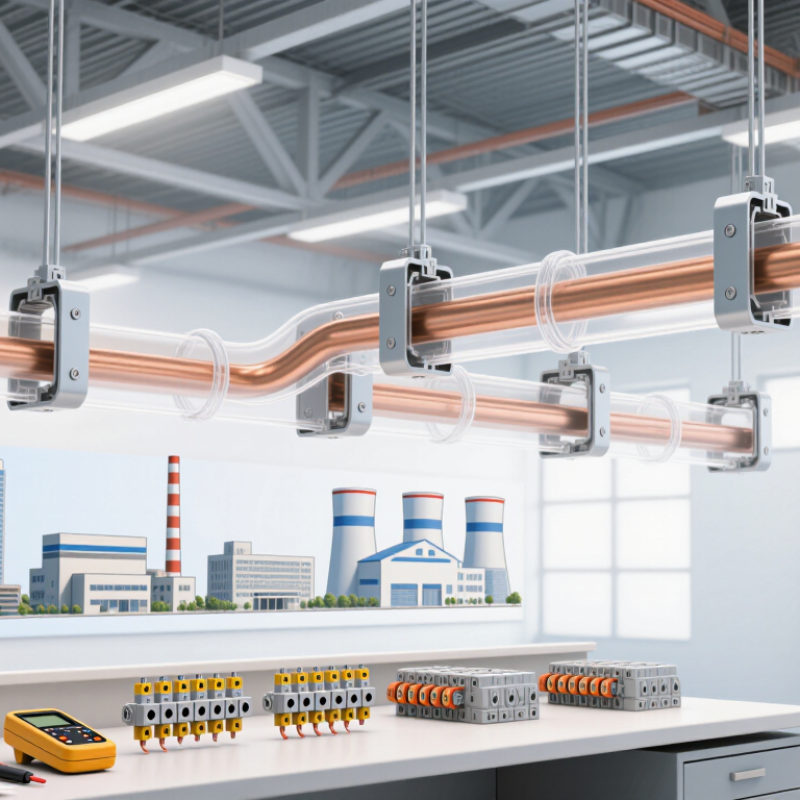
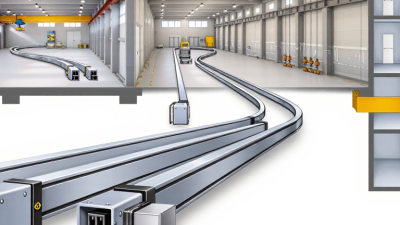
Air-type busway systems carry power through conductors housed in a metal enclosure, with air and insulating supports separating live parts. Their modular sections can run above factory floors, around columns, or through service corridors. Tap-off units let teams connect machinery at selected points without routing a separate cable from the main panel.

Useful detail: check that each tap-off matches the busway’s current rating and installation method.

These systems suit manufacturing lines, warehouses, commercial buildings, and other sites where equipment layouts may change. Before selecting one, compare rated current, short-circuit withstand capacity, enclosure protection, and the available space for joints and bends. Dusty or damp areas need closer attention to enclosure ratings and maintenance access. Real sites are rarely as tidy as drawings. Allow room for inspection, and confirm that supports can handle the installed load. Air-type busway can simplify distribution, but it is not automatically the best fit for every route; a qualified electrical designer should review site conditions and operating requirements.
How to Evaluate Air-Type Busway Suppliers in China

When evaluating air-type busway suppliers in China, request evidence tied to the exact product configuration, not just a general catalogue. Check rated current, voltage, conductor material, insulation class, enclosure protection, temperature-rise results, and short-circuit withstand data. Reports should identify the tested model and date. A certificate alone is not enough.

Ask how conductors, joints, and housings are inspected during production. Useful evidence includes material certificates, inspection records, and documented torque checks for joint connections. Ask to see it. A sample joint can reveal alignment, contact surfaces, and whether the cover closes without force. If possible, compare a production sample with the drawings and bill of materials. A polished factory video is only a starting point; it cannot show every shift or rejected part. Even a careful checklist has limits: field installation can expose issues a factory test misses.

Confirm the supplier can review your site conditions, including ambient heat, dust, humidity, installation clearance, and cable-entry direction. Request references for comparable loads and layouts, plus a clear process for handling defects, spare joints, and technical questions across time zones. Do not judge solely by low price or fast replies. A slow answer may be a warning, though not always. Details matter.

Leading Chinese Air-Type Busway Suppliers for Global Buyers

For global buyers, Chinese air-type busway suppliers should be assessed on engineering evidence, not catalogue breadth alone. The International Energy Agency’s Electricity 2024 report projects global electricity demand to grow by an average of 3.4% annually from 2024 to 2026. That expansion puts pressure on distribution systems in factories, commercial buildings, and data centres. Buyers should compare rated current, temperature-rise test results, short-circuit withstand capacity, enclosure protection, and joint design. Ask for test reports tied to the exact product configuration. Details matter.

A supplier’s export experience is useful, but it does not replace factory audits or sample inspections. Check whether drawings, conductor materials, insulation specifications, and installation instructions match the quotation. Request traceable quality records and clarify how production changes are controlled. For long runs, inspect joint alignment and connection access; small fit problems can slow installation. Some gaps remain. I would also ask for references from projects with similar loads and operating conditions, then verify them independently. The IEA outlook signals rising demand, but it does not guarantee that every project needs the same busway design. A careful technical review is still necessary.

Top Air Type Busway Suppliers in China for Global Buyers – Leading Chinese Air-Type Busway Suppliers for Global Buyers

Evaluation Dimension What Global Buyers Should Check Relevant Technical Information Documents or Evidence to Request
Product standard Confirm that the offered busbar trunking system is designed, tested, and documented for the applicable market and project requirements. IEC 61439-6 covers low-voltage busbar trunking systems. The applicable edition and any local adoption should be confirmed for each project. Standard declaration, test reports, product drawings, and a clear list of covered ratings and configurations.
Rated current Match the system rating to the calculated load, ambient conditions, installation method, and required allowance for future expansion. Busway systems are available in different current ratings; the suitable rating depends on the product design and installation conditions. Rated-current tables, temperature-rise test evidence, derating guidance, and installation instructions.
Rated voltage and frequency Check compatibility with the site’s electrical system, including the operating voltage, frequency, and insulation requirements. Rated voltage and frequency are product-specific. Do not assume that a system intended for one network is suitable for another. Nameplate data, technical datasheet, insulation ratings, and confirmation of the project’s system parameters.
Conductor material Compare conductor material, cross-section, conductivity, connection design, and lifecycle requirements. Copper and aluminum conductors are both used in busway systems. Their selection affects weight, dimensions, connections, and electrical performance. Conductor material specification, cross-section details, joint design, and applicable performance test results.
Conductor configuration Verify the number and arrangement of phase, neutral, and protective conductors for the intended distribution system. Configurations vary by product and application. Neutral and protective-conductor provisions should be clearly stated in the design. Single-line diagrams, conductor-layout drawings, neutral rating details, and earthing arrangement documentation.
Ingress protection Select an enclosure protection level suitable for the installation environment and exposure to dust or water. IP classifications are defined by IEC 60529. The required rating depends on the installation location and product configuration. Declared IP rating, supporting test evidence, and confirmation that the rating applies to joints and fittings as installed.
Short-circuit withstand Compare the system’s short-circuit withstand capability with the prospective fault level and protective-device coordination at the site. Short-circuit performance is dependent on the busway rating, configuration, and tested assembly. Short-circuit withstand data, test reports, and coordination information for the specified arrangement.
Joint and tap-off design Review joint accessibility, connection method, tap-off options, mechanical interlocking, and safe installation procedures. Joint and tap-off arrangements are specific to the product system and must be compatible with its busway sections and ratings. Assembly drawings, installation manuals, tap-off ratings, and maintenance or inspection instructions.
Environmental suitability Assess ambient temperature, humidity, altitude, corrosion exposure, indoor or outdoor use, and seismic requirements where applicable. Environmental limits and any required derating are manufacturer- and project-specific. Operating-condition limits, derating tables, material or coating specifications, and project-specific confirmation.
Quality and traceability Evaluate production controls, inspection records, component traceability, and the supplier’s process for handling nonconforming products. Quality-system certifications do not replace product-specific verification or the review of test evidence. Current quality certificates, inspection and test plans, sample inspection records, and traceability procedures.
Export and project support Confirm the supplier can provide export packaging, shipment documentation, technical communication, and installation support for the destination market. Import requirements, local approvals, language needs, and delivery terms vary by destination and project. Export document checklist, packing details, delivery schedule, warranty terms, and technical support arrangements.

Note: This is a supplier-evaluation checklist, not a ranking of named companies or a statement of any individual supplier’s capabilities. Confirm all ratings, certifications, test evidence, and local approvals against the project specification and destination-market requirements.

Comparing Supplier Capabilities, Products, and Certifications

Comparing air-type busway suppliers means looking beyond rated current. Ask for clear data on conductor material, enclosure dimensions, temperature rise, short-circuit withstand, and tap-off unit options. The International Energy Agency’s Electricity 2025 report projects global electricity demand growth of 3.3% in 2025 and 3.7% in 2026. This makes scalable distribution relevant, but growth forecasts cannot replace project-specific load calculations.

The IEA’s Energy and AI (2025) report estimates data-centre electricity use at about 415 TWh in 2024, potentially rising to 945 TWh by 2030. For facilities with dense loads, compare suppliers’ air-type systems for indoor layouts, plug-in point spacing, heat dissipation, and access for maintenance. Details matter. Request type-test reports against IEC 61439-6, and check whether stated ratings apply to the exact configuration being quoted. A certificate alone is not proof that every assembly option was tested.

Review quality-system certificates, factory inspection records, routine-test procedures, and export packing details. Ask how suppliers control joint torque and verify connections; a small inconsistency here can become a costly site issue. Compare copper and aluminium options using actual weight, loss, and budget data. Not enough. Lead times and drawings also need checking, although these details are sometimes overlooked until installation planning starts. One honest limitation: published test data may not mirror your site’s ambient temperature or installation conditions.

How Global Buyers Can Verify and Source Busway Systems

Global buyers should verify a busway system against the actual load, route, and installation environment. Request rated current, voltage, insulation class, enclosure protection, temperature-rise data, and short-circuit withstand results. Check that documents identify the exact configuration being quoted, not merely a product family. Details matter. Compare conductor material, joint design, and tap-off options with the project drawings.

Ask for test reports, inspection records, material traceability, and installation manuals before approving a supplier. Have a qualified electrical engineer review the ratings and applicable regional standards. Confirm factory capacity, lead times, spare parts, and warranty terms in writing. A video factory tour can help, but it cannot replace inspection or independent verification. If possible, evaluate a sample joint and enclosure finish. Small defects show up here.

For overseas sourcing, clarify packing, shipping dimensions, delivery terms, and commissioning support. Request drawings in editable and PDF formats, plus a clear bill of materials. Ask specific questions: “What supports this rating?” is more useful than “Is it certified?” Recheck assumptions after site measurements; routing changes are easy to underestimate. No supplier can remove every project risk. A careful paper trail makes gaps visible before purchase.