China Best Busbar End Feed Unit Manufacturer?
China’s Busbar End Feed Unit market is gaining attention as factories, data centers, and commercial buildings demand safer, faster power distribution. Grand View Research identifies busbar trunking systems as a growing global segment, supported by modular construction and rising electrical infrastructure investment. MarketsandMarkets also links busbar demand with expanding data centers and industrial facilities.
A Busbar End Feed Unit connects a power source to a busbar trunking system. Its design affects heat control, connection stability, installation speed, and maintenance access. Under IEC 61439-6, manufacturers must address verification, temperature rise, short-circuit strength, and enclosure performance. Small details matter. A loose contact can create heat, discolor insulation, and threaten continuity.
Dr. Greg C. Stone, a recognized power-system reliability specialist, has stated, “Reliability is not a product feature; it is a system property.” That principle deserves careful consideration here. A strong manufacturer should provide tested copper or aluminum conductors, accurate joint alignment, clear torque instructions, and traceable quality records. Factory photographs are useful, but they are not proof. Independent test reports matter more.
China offers competitive pricing, broad production capacity, and flexible customization. Yet cost alone can mislead buyers. Some catalogs simplify ratings. Some projects underestimate ambient temperature or fault-current requirements. This guide examines how to evaluate China’s best Busbar End Feed Unit manufacturer, including standards, materials, testing, delivery experience, and after-sales support. The ideal supplier is not merely inexpensive. It is technically transparent, consistent, and willing to show evidence.
What Is a Busbar End Feed Unit?
What Is a Busbar End Feed Unit?
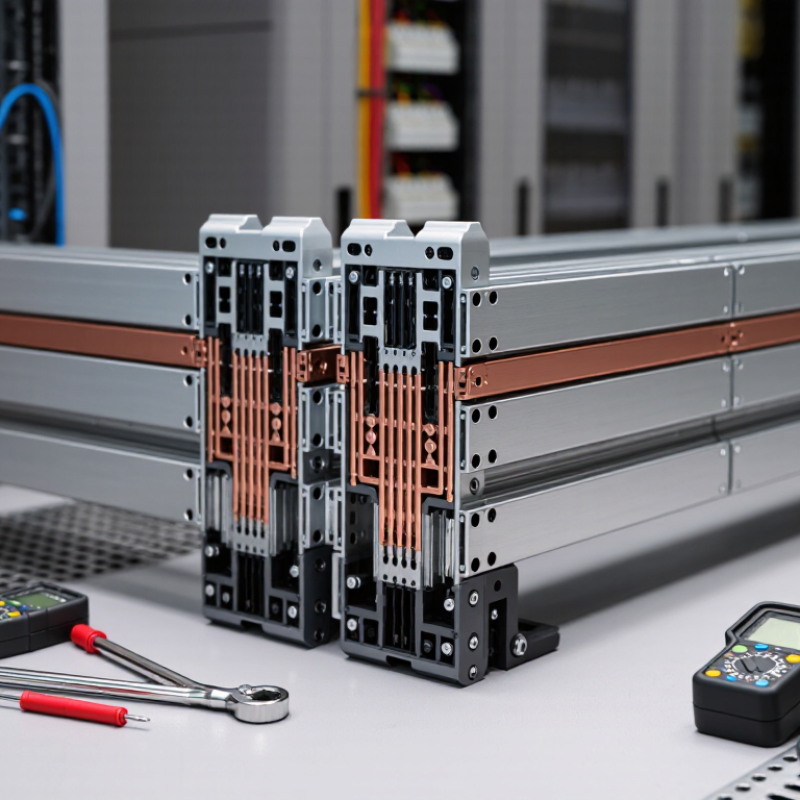
A busbar end feed unit supplies electrical power to a busbar trunking system from one end. It connects incoming cables to the enclosed conductor bars. Inside the housing, terminals, insulation, and protective barriers manage the connection safely. The unit then distributes power along the busbar route to tap-off points.
In practical installations, the enclosure must match the busbar rating, conductor layout, and cable size. A suitable unit should provide secure terminals, strong insulation, and enough space for cable bending. Its housing also needs resistance to heat, dust, and mechanical impact. During installation, technicians should check torque values and phase identification. A loose terminal can create heat at the connection point. That small detail matters.
Tips: Confirm voltage, current, short-circuit rating, and ingress protection before ordering. Measure the cable entry direction carefully. End feed units may differ for indoor and outdoor applications. Always inspect the contact surfaces before energizing the system.
Selecting a reliable manufacturer requires more than comparing prices. Review technical drawings, testing records, material specifications, and production experience. Ask how each unit is inspected before shipment. Factory quality control can reduce installation problems, but it cannot replace correct field testing. I would also request samples for complex projects. No selection guide is perfect. The actual site conditions still deserve careful review.
What Is a Busbar End Feed Unit?
A busbar end feed unit connects an incoming power cable to the end of a busbar trunking system. Its nominal current rating must match the busbar system, protective device, conductor size, temperature limits, and installation conditions.
The chart shows commonly specified nominal current classes for low-voltage busbar end feed units. Actual selection should be verified against the manufacturer’s technical documentation and the requirements of IEC 61439 for low-voltage switchgear and controlgear assemblies.
How Does a Busbar End Feed Unit Work?
China Best Busbar End Feed Unit Manufacturer?
How Does a Busbar End Feed Unit Work?
A busbar end feed unit transfers electrical power into a busbar trunking system. It connects incoming cables to enclosed copper or aluminum conductors. Inside, terminals, barriers, and insulation maintain separation between phases. When energized, current travels along the busbar, not through exposed wiring. This arrangement supports cleaner routing in factories, warehouses, and data facilities.
The unit must match the system’s rated current, voltage, short-circuit withstand, and enclosure rating. A 2024 International Energy Agency electricity report expects global electricity demand to grow by about 4% annually through 2026. That growth increases pressure on compact distribution equipment. A properly selected end feed can reduce cable congestion and simplify future capacity planning. Small details matter.
During installation, technicians verify torque, phase sequence, cable bending space, and earthing continuity. They also inspect joints after thermal testing. IEC 61439-6 requires verification for busbar trunking assemblies, including temperature-rise and short-circuit performance. A common mistake is choosing only by amperage. Ambient temperature, installation position, and fault level can change the real requirement. Field experience shows that rushed torque checks create avoidable heating points. That deserves reflection.
How to Evaluate China’s Best Busbar End Feed Unit Manufacturer?
How to Evaluate China’s Best Busbar End Feed Unit Manufacturer?
Rising electricity demand makes dependable power distribution more important.
The IEA’s Electricity 2024 report forecasts global electricity demand growth of about 3.4% annually through 2026. This creates pressure on every connection point, including the busbar end feed unit. A capable Chinese manufacturer should provide products designed around IEC 61439 requirements, not only attractive catalog images. Request temperature-rise, dielectric-strength, short-circuit, and ingress-protection test records for the exact model.
Look closely at material control. Ask whether copper or aluminum conductors have documented grades, measured plating thickness, and batch traceability. The enclosure should show consistent sealing, clean bends, and no sharp edges around cable entries. Check rated current, voltage, IP rating, ambient temperature, and installation orientation. Small omissions matter. They can become costly site problems.
Factory experience also needs evidence. Request recent factory acceptance test reports, calibration certificates, process photographs, and references for similar projects. A manufacturer with ISO 9001 certification may have stronger quality controls, but certification alone proves little. Verify the certificate and its scope. Industry research from MarketsandMarkets identifies reliability, safety, and modular installation as major busbar system purchasing factors. I would also compare sample dimensions against approved drawings. One honest weakness is acceptable: a supplier that clearly reports a testing limitation may be more trustworthy than one promising perfection. Avoid choosing by price alone. Evaluate engineering response time, spare-part support, warranty terms, and documented corrective actions.