2026 Best Aluminum Dense Busway Options for Efficient Power Distribution?
As industries seek greater energy efficiency, the demand for effective power distribution systems is rising. The Aluminum Dense Busway has emerged as a leading solution. Recent reports indicate that this technology can improve energy efficiency by up to 30%. This shift is crucial in light of the global push for sustainable practices.
Industry expert Dr. Emily Chen emphasizes its importance, stating, "Aluminum Dense Busway systems are essential for modern power distribution, offering unmatched durability and efficiency." Such systems streamline operations and reduce energy losses. However, installing these systems requires careful consideration of infrastructure and cost.
Despite their advantages, some challenges remain. Installation can be complex and may lead to unexpected costs. Organizations need to weigh the benefits against these potential drawbacks. Exploring the best options for Aluminum Dense Busway in 2026 will help address these concerns, ensuring reliability and performance in power distribution.

Overview of Aluminum Dense Busway Technology
Aluminum dense busway technology is gaining popularity for its efficient power distribution capabilities. This innovative system offers several advantages, particularly in industrial and commercial settings. It is lightweight yet strong, allowing for easier installation and maintenance. The design enables greater flexibility in power distribution, accommodating varying loads seamlessly.
Employing aluminum in busway systems enhances conductivity and reduces resistive losses. This results in minimized energy waste and improved overall efficiency. However, the choice of materials and installation techniques directly impacts performance. Users must consider factors such as thermal management and environmental conditions when selecting busway systems.
Tips: Regularly inspect connections and joints for wear. Over time, corrosion can affect efficiency. Keep busway systems clean to maintain optimal performance. Ensuring proper ventilation around busways helps dissipate heat effectively, prolonging lifespan.
Incorporating dense busway technology can seem appealing, but it's crucial to understand potential shortcomings. Some installations may require complex configurations. Comprehensive planning is vital to address any challenges that arise during implementation. Ultimately, understanding the nuances of aluminum dense busway systems can lead to better decision-making and enhanced power distribution efficiency.
Key Benefits of Using Aluminum in Busway Systems
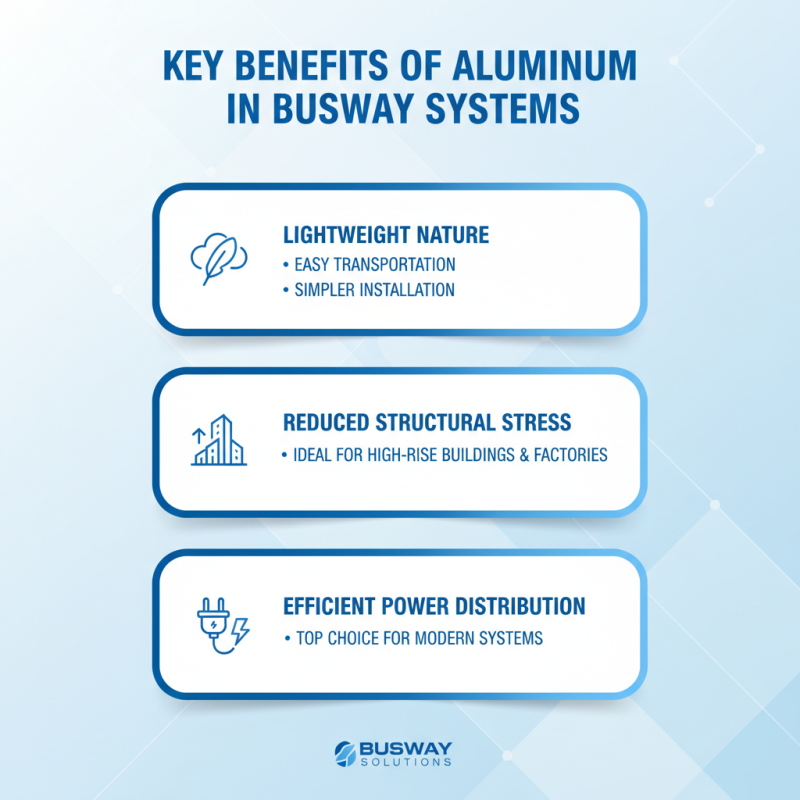
Aluminum is becoming a top choice for busway systems, particularly for power distribution. Its lightweight nature simplifies transportation and installation. With less weight, it also reduces the stress on structural designs. This can be crucial for high-rise buildings or factory settings.
The conductivity of aluminum is another key benefit. While copper is often regarded as the conductor of choice, aluminum can offer comparable performance at a lower cost. The right alloy can enhance efficiency and longevity, which makes it suitable for various applications. It is important to select the appropriate aluminum grade for your specific needs.
However, some challenges remain. Aluminum can be more susceptible to oxidation. Proper protective methods are essential. Furthermore, connections in aluminum systems require careful handling to ensure reliability. These aspects need further exploration and understanding for optimal performance. Still, the potential for energy savings makes aluminum busway systems an attractive option for modern power distribution.
Comparative Analysis of Top Aluminum Dense Busway Products
When considering efficient power distribution, aluminum dense busways emerge as key components. Their lightweight characteristics contribute to easier installation and maintenance. They provide superior thermal conductivity. This feature allows for better heat dissipation, ensuring reliable performance during peak loads.
In a comparative analysis of aluminum dense busway products, several factors come into play. One key aspect is the material quality. Some products may promise high conductivity but fall short under real-world conditions. Additionally, the overall design affects installation time and flexibility within system layouts. Users often face choices between standard configurations and tailored solutions that fit specific needs.
Furthermore, while many products claim durability, some may not withstand harsh environmental conditions. Evaluating customer feedback can reveal hidden issues. Users should assess both performance data and third-party evaluations. Understanding these nuances leads to informed decisions on the optimal busway solutions for any application.
Installation and Maintenance Best Practices for Busway Systems
Installation and maintenance of busway systems are critical for efficient power distribution. Data from the Electrical Power Research Institute indicates that improper installation can lead to energy losses of up to 10%. Ensuring optimal connections and proper alignment can mitigate this risk significantly. Technicians should receive thorough training to avoid common pitfalls, such as misalignments and loose fittings.
Regular maintenance is another cornerstone for longevity. Experts recommend inspecting busway systems at least twice a year. During these inspections, look for physical damage, corrosion, or loose connections. These issues can compromise efficiency. Some facilities neglect these checks, leading to unexpected downtime.
A small investment in routine maintenance can prevent costly repairs or replacements.
Experience shows that facilities implementing predictive maintenance strategies report 15%-20% fewer operational failures. While data suggests many systems could improve, not all facilities recognize the importance of these practices. Adopting a proactive approach will ensure optimal performance and reliability in power distribution.
Future Trends in Aluminum Busway Solutions for Power Distribution
In recent years, the demand for efficient power distribution has propelled the development of aluminum busway solutions. These systems are lightweight, yet they provide excellent conductivity. Many businesses now favor them over traditional copper options due to cost and performance. As technology continues to advance, the design of aluminum busways is becoming more versatile. Innovations in thermal management enhance performance in demanding environments.
Furthermore, the push for sustainability amplifies interest in aluminum due to its recyclable nature. Manufacturers are exploring new coating technologies to improve corrosion resistance. Some industry experts argue that the durability of these solutions still needs enhancement. Challenges persist in achieving a balance between weight and electrical performance. Users should evaluate the long-term impacts of using lower-quality materials. These trends are shaping the future landscape of power distribution.
Advancements in manufacturing technology also play a crucial role. The integration of smart grid solutions will drive further improvements in busway designs. Companies are investing in research to understand the long-term reliability of aluminum aspects. The future points toward increased efficiency and adaptability in power distribution systems, but reflections on common pitfalls remain essential.