Leave Your Message

5 Best Lighting Busbar Systems for Global Buyers?

Choosing the right Lighting Busbar system is rarely as simple as comparing prices or product photographs. Global buyers must examine electrical capacity, conductor materials, insulation quality, connector design, and installation conditions. A system that performs well in a retail showroom may struggle in a humid warehouse or a high-ceilinged commercial space.

This guide reviews five Lighting Busbar systems for international purchasing decisions. It considers practical factors, including track length, tap-off flexibility, grounding arrangements, heat management, and maintenance access. It also considers supplier documentation, factory experience, quality-control procedures, and after-sales support. These details often determine whether a project remains efficient after installation.

Performance matters.

Reliable systems should provide stable power distribution, secure connections, and convenient fixture repositioning. Buyers should also verify testing reports, technical drawings, rated voltage, current limits, and compatibility with local electrical requirements. Certification marks may differ between markets, so one certificate does not automatically guarantee universal acceptance.

That point deserves attention.

The “best” system depends on the application, budget, building structure, and installer capability. Some comparisons may appear convincing but omit labor costs, replacement parts, or long-term inspection needs. This guide therefore avoids treating one brand as perfect. Real projects can expose weaknesses that product brochures do not mention.

Before placing an order, buyers should request samples, confirm specifications in writing, and review installation instructions with qualified professionals. Careful verification reduces delays, unsafe assumptions, and costly redesigns. It also creates a more dependable basis for selecting a Lighting Busbar system across different countries and project environments.
5 Best Lighting Busbar Systems for Global Buyers?

Lighting Busbar Fundamentals: IEC 60570, 25–63 A Ratings, and Modular Design

For global buyers comparing the five best lighting busbar systems, IEC 60570 is a practical starting point. It addresses electrical supply track systems for luminaires, including construction, testing, and safe connection methods. Compliance should be confirmed through current test reports, not marketing language. Local electrical rules may also apply.

In project work, I check the rated current before reviewing appearance. Common systems fall between 25 A and 63 A. A 25 A track may suit retail displays, while a 63 A model supports longer runs or denser lighting layouts. Cable length, voltage drop, ambient temperature, and protective devices can change the real capacity. The label alone is not enough.

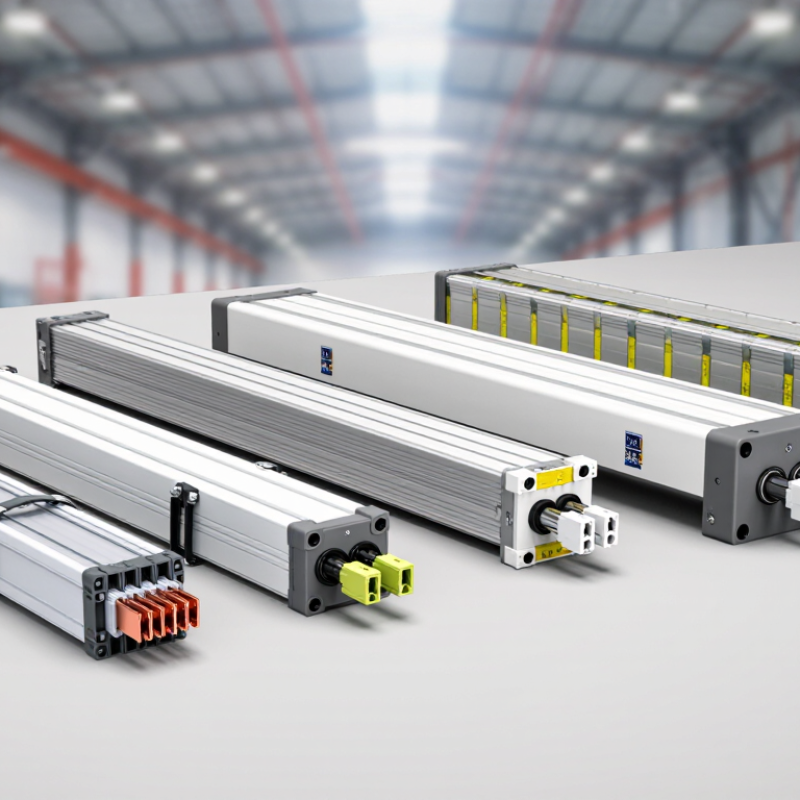
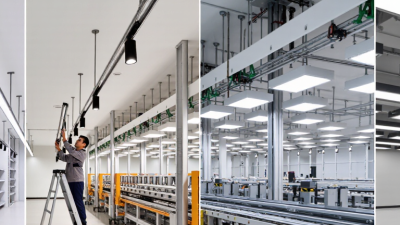
Modular design reduces installation time. Straight sections, bends, feed units, and movable tap-offs help installers adapt lighting positions without rebuilding the entire route. Good connectors should lock firmly and preserve earth continuity. I also inspect joint spacing, mounting strength, and access for maintenance. Small details matter. A clean layout can still hide poor contact pressure or overloaded circuits. I have learned to question impressive drawings when the installation instructions are vague. Suppliers should provide dimensional drawings, material data, test evidence, and clear current limitations. This is where reliable comparison becomes less convenient, but much more useful.
Lighting Busbar Fundamentals: IEC 60570, 25–63 A Ratings, and Modular Design

Representative lighting busbar current ratings and their calculated single-phase power capacity at 230 V. IEC 60570 defines safety requirements for busbar trunking systems for luminaires; the current values shown are common market rating options rather than mandatory IEC classes.

Calculation: apparent power capacity = rated current × 230 V. Actual usable load depends on installation conditions, power factor, temperature, protective devices, and the specific busbar design.

Best System 1: Single-Circuit Tracks for 230 V Retail Lighting

Single-circuit tracks are a practical choice for 230 V retail lighting, especially in small shops and compact display areas. One energized circuit powers every connected luminaire. Installation is straightforward, and repositioning a spotlight usually requires no rewiring. That saves time during seasonal merchandising changes.

The U.S. Department of Energy reports that LED products use at least 75% less energy than incandescent lighting and can last up to 25 times longer. This matters in stores where lighting operates for long daily hours. A 20-watt LED spotlight can illuminate a shelf without producing the intense heat of older halogen lamps. However, thermal performance still depends on ceiling height, ventilation, and fixture quality. The International Energy Agency’s Energy Efficiency 2024 report also highlights lighting efficiency as a continuing source of electricity savings.

Do not oversell simplicity. A single circuit switches all fixtures together, limiting scene control and energy zoning. A checkout area and window display may need different brightness levels. They cannot operate independently without additional control equipment. Check the track’s rated current, conductor design, earthing arrangement, and connector compatibility before installation. IEC 60598-1 provides general requirements for luminaires, while local 230 V wiring rules remain decisive. In practice, I would leave spare capacity for future heads, but not assume every adapter fits. That mistake is common. Measurement on site is still better than relying on a catalogue drawing.

Best System 2: Three-Circuit Tracks with 16 A Independent Switching

Three-circuit tracks with 16 A independent switching suit retail, galleries, and adaptable offices. Each circuit can control a separate lighting group, such as spotlights, wall washers, and display pendants. This creates clearer scenes without installing three separate ceiling systems.

The International Energy Agency and UNEP report that lighting uses about 15% of global electricity. Better zoning can reduce unnecessary operating hours, especially in spaces with changing occupancy. A 16 A rating is not a target load. Designers should check LED inrush current, power factor, cable temperature, and protective-device coordination. IEC 60570 also provides relevant safety requirements for track-mounted luminaires. In practical installations, independent switching makes maintenance easier. One circuit can remain active while another is isolated. That detail matters during late-night store changes.

Tips: Keep each circuit visibly labelled at the distribution board. Test all three switching groups with the actual luminaires, not only sample loads. Leave spare capacity for future fittings. Also verify local electrical rules before specifying the system; ratings and installation methods vary by country. One weakness deserves reflection: three circuits may encourage over-lighting. A bright showroom can still waste energy. Use occupancy sensors, daylight controls, and measured lux levels where suitable. The U.S. Department of Energy’s solid-state lighting research consistently shows that controls can improve savings beyond lamp efficiency alone. Yet controls fail when commissioning is rushed. Record the final switching schedule, and review it after staff use the space.

5 Best Lighting Busbar Systems for Global Buyers? – Best System 2: Three-Circuit Tracks with 16 A Independent Switching

Evaluation Dimension Reference Data for a Three-Circuit Track Why It Matters to Global Buyers Buying and Installation Check
Circuit architecture Three separately selectable lighting circuits, commonly arranged with a shared neutral and protective earth conductor. Allows accent, ambient, and task lighting to be controlled independently from the same continuous track. Confirm the track, adapters, feed units, and switches all use the same circuit-position arrangement.
Current rating Up to 16 A per circuit where the complete track assembly is rated for 16 A. Provides substantially more capacity than typical LED lighting loads and supports future fixture changes. Treat 16 A as a maximum rating, not a recommended continuous lighting load; apply local electrical-code requirements.
Approximate circuit capacity At 120 V: approximately 1.92 kW per 16 A circuit. At 230 V: approximately 3.68 kW per 16 A circuit. Helps buyers estimate connected load when comparing North American and European supply conditions. Actual usable load depends on power factor, inrush current, breaker selection, conductor temperature, and national regulations.
Nominal supply compatibility Common lighting-track applications use 120 V or 220–240 V AC systems, depending on the regional version. Supports international projects when the electrical version is selected for the destination market. Check rated voltage, frequency, insulation category, plug or feed-unit format, and local certification before ordering.
Typical track lengths Factory lengths commonly include approximately 1 m, 1.5 m, 2 m, and 3 m; field-cutting depends on the construction. Offers flexibility for retail, hospitality, gallery, office, and residential layouts. Verify cut-point instructions, end-feed compatibility, joint spacing, and maximum permitted continuous length.
Independent switching Compatible adapters can be assigned to circuit 1, 2, or 3, enabling separate on/off control of fixture groups. Improves scene setting, energy management, and maintenance without installing separate tracks for each group. Confirm the adapter selector positions are clearly marked and cannot be changed accidentally after installation.
Construction materials Common construction uses an extruded aluminium housing with insulated copper conductors and polymer insulating components. Aluminium provides a relatively light, rigid housing and supports heat dissipation from compatible fittings. Request conductor cross-section, material declarations, mechanical-load limits, and surface-finish specifications.
Ingress protection Indoor three-circuit tracks are commonly specified around IP20 unless a higher-rated enclosure is explicitly provided. Suitable for dry interior areas such as shops, offices, galleries, and hospitality spaces. Do not use an indoor IP20 system in damp, dusty, exterior, or wash-down areas without verified environmental protection.
System expandability Straight connectors, corner connectors, suspension kits, end caps, and multiple feed options are commonly available for modular systems. Makes it easier to reconfigure lighting as displays, furniture, or room functions change. Ensure every accessory preserves electrical continuity, polarity, earth continuity, and the intended circuit sequence.
Best-fit application Retail stores, showrooms, galleries, restaurants, offices, and other indoor spaces requiring multiple lighting scenes. A strong choice when flexibility and independent control are more important than the lowest initial material cost. Have the final circuit design, protection, earthing, and installation inspected by a qualified electrician.

Technical values are typical reference points for three-circuit lighting tracks; the manufacturer’s current datasheet and the destination country’s electrical regulations take precedence.

Best Systems 3–4: DALI-2 and Emergency Lighting Under IEC 62386

DALI-2 busbar systems combine power distribution with digital lighting control through a dedicated two-wire communication line. The approach suits offices, retail spaces, and production areas that need frequent layout changes. The International Energy Agency reports that lighting consumes about 15% of global electricity demand. Better control can therefore produce measurable operational savings.

IEC 62386 defines communication and testing requirements for interoperable DALI equipment. DALI-2 adds stronger verification for control devices, which helps reduce commissioning errors. The U.S. Department of Energy has reported that advanced lighting controls can reduce lighting energy use by roughly 20–30% in suitable buildings. Actual savings depend on zoning, occupancy patterns, daylight, and commissioning quality.

Emergency lighting needs stricter attention. IEC 62386-202 addresses control gear for self-contained emergency lighting, including status and test functions. A busbar system should support clear fault reporting, battery-test schedules, and manual inspection access. Do not treat DALI-2 communication as proof of complete emergency compliance. Local fire rules, escape-route design, and backup duration still apply.

In practical projects, installers should label each circuit before energizing it. A simple mistake can assign an emergency fitting to the wrong group. That is not theoretical. Designers should also check voltage drop, bus loading, gateway behavior, and failure modes. The weak point is often commissioning, not the busbar itself.

Best System 5: IP20–IP54 Busbars with CE, UL, and 120–277 V Support

Best System 5: IP20–IP54 Busbars with CE, UL, and 120–277 V Support

For global buyers, an IP20–IP54 busbar system offers practical flexibility. IP20 suits clean, dry interiors, such as offices and retail ceilings. IP54 adds protection against dust and light water exposure. It fits workshops, service corridors, and semi-industrial spaces better. The enclosure rating should match the installation environment, not just the project specification.

Voltage support from 120 to 277 V simplifies international planning. It can serve lighting circuits across many commercial buildings. Still, voltage range alone does not confirm compatibility. Buyers should verify frequency, conductor size, tap-off ratings, grounding design, and installation accessories. Check twice. A qualified electrician must review the complete circuit before energizing it.

CE and UL documentation can strengthen procurement confidence when the certificates match the exact configuration. Ask for test reports, declaration details, temperature limits, and installation instructions. In practical project reviews, connector quality often matters as much as the busbar housing. Poor alignment can create delays, visible gaps, or unstable tap-offs. That is easy to overlook. I would also question unclear IP testing methods and incomplete maintenance guidance. A system may look excellent in a catalog, yet perform differently after repeated installation changes. Clear records, traceable components, and accessible technical support make the difference for long-term global use.