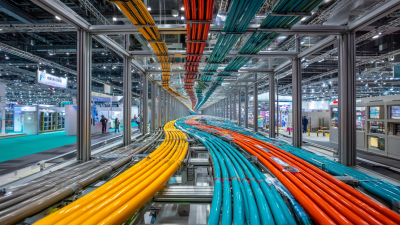
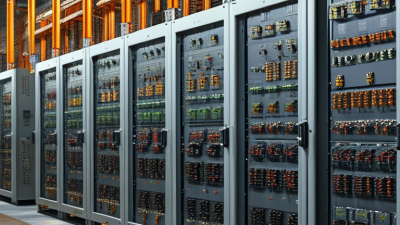
The global demand for reliable power distribution is reshaping commercial buildings, factories, and data centers. Intensive Busway systems now support dense electrical loads with less floor-space disruption than traditional cable arrangements. They also simplify capacity expansion when equipment changes.
This article examines ten leading Intensive Busway manufacturers worldwide. The comparison considers product design, current ratings, installation flexibility, thermal performance, monitoring options, certifications, and service coverage. It also considers practical details, such as joint access, tap-off placement, enclosure strength, and maintenance space.
According to electrical infrastructure specialist Michael R. Johnson, “A busway earns trust through predictable performance, not impressive specifications alone.” That point deserves attention. A polished catalogue cannot replace field experience. Engineers must inspect voltage-drop calculations, short-circuit ratings, ingress protection, and compatibility with existing switchgear.
Manufacturers differ significantly. Some focus on data centers. Others serve heavy manufacturing, commercial towers, or renewable-energy facilities. Their supply chains and regional approvals also affect project risk. A product accepted in one market may require additional verification elsewhere.
The ranking is not absolute. Selection criteria can change the order. That is an important limitation.
Readers will find a practical overview rather than a simple popularity list. Each manufacturer is assessed through engineering capability, application history, product range, technical support, and reliability evidence. The discussion also recognizes uncertainty, because published performance claims do not always reflect installation conditions. Careful comparison remains essential before any purchasing decision.
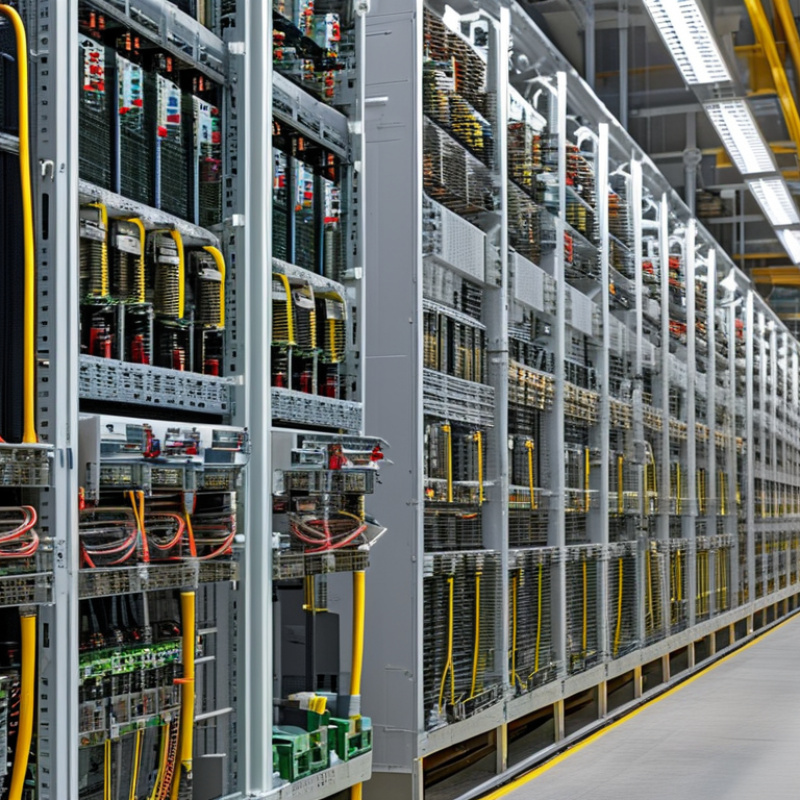
Intensive busway systems are compact electrical distribution assemblies built for high-current delivery in demanding facilities.
They replace long cable bundles with enclosed conductors, reducing clutter above production lines, data rooms, and commercial floors. Their main function is simple: move power safely from a source to multiple loads.
A typical system contains copper or aluminum conductors, insulation layers, a protective metal housing, joint covers, and tap-off points.
The enclosure supports mechanical protection and helps control heat. Tap-off boxes allow equipment to connect at selected locations without rebuilding the entire route.
Grounding paths, phase barriers, and monitoring devices improve operational safety. During site inspections, engineers should check joint torque, enclosure alignment, temperature rise, and protection settings.
Small installation errors can become expensive failures.
Tips:
Confirm the required current, fault level, ambient temperature, and future expansion space before selecting a system. Measure actual load patterns, not only nameplate ratings.
Leave access around joints and tap-off units for maintenance. Independent testing and clear records also support reliability.
Some designs look efficient on paper but perform poorly when ventilation, dust, or uneven support spacing is ignored. That detail is easy to underestimate.
Top 10 Intensive Busway Manufacturers Worldwide
A credible global ranking needs more than sales estimates or polished websites. It should examine verified project experience, engineering depth, manufacturing consistency, and after-sales performance. Publicly available evidence may include factory audits, independent test reports, certifications, and documented installations in demanding facilities.
Technical capability deserves strong weighting. Reviewers should compare current ratings, short-circuit withstand capacity, temperature-rise results, enclosure protection, joint design, and fire performance. A manufacturer serving data centers should demonstrate stable operation under heavy, continuous loads. Product flexibility also matters, including tap-off units, compact layouts, monitoring options, and compatibility with local electrical standards. Delivery accuracy, spare-part access, warranty terms, and field response times reveal operational reliability. Still, ranking data can be incomplete. No ranking is flawless.
Tips: Request test records, not promises. Inspect sample joints and tap-off connections when possible. Ask for references from facilities with similar load profiles. Compare failure rates over several years, rather than relying on one successful installation. Check whether technical support reaches the job site quickly. Pricing should be reviewed, but low initial cost can hide difficult maintenance later. Independent engineers should verify claims, especially when published performance figures lack test conditions or clear measurement methods. A careful ranking also separates product quality from regional market size, because high sales do not always indicate stronger engineering.
| Rank | Anonymous Manufacturer Profile | Overall Index (100) |
Rated Current Range |
Typical IP Protection |
IEC 61439-6 Evidence |
Short-Circuit Withstand |
System Types | Regional Service Coverage |
Primary Strength |
|---|---|---|---|---|---|---|---|---|---|
| 1 | Profile A — Global high-capacity specialist | 94 | 250–6300 A | IP42–IP68 | Full system documentation | Up to 100 kA peak* | Sandwich, feeder, plug-in | Global | Large data centers and industrial plants |
| 2 | Profile B — Certified modular-system producer | 92 | 250–5000 A | IP40–IP66 | Routine and design verification | Up to 100 kA peak* | Feeder, plug-in, rising main | Global | Flexible layouts and rapid installation |
| 3 | Profile C — High-reliability power-distribution supplier | 90 | 400–5000 A | IP42–IP65 | IEC-based verified assemblies | Up to 100 kA peak* | Sandwich and feeder | Americas, Europe, Asia | Mission-critical continuity |
| 4 | Profile D — Industrial and commercial busway manufacturer | 88 | 160–5000 A | IP40–IP65 | Design verification available | Up to 100 kA peak* | Feeder, plug-in, lighting | Regional and export | Balanced cost and performance |
| 5 | Profile E — Data-center-focused busway supplier | 86 | 225–4000 A | IP42–IP55 | Documented product verification | Up to 80 kA peak* | Plug-in and overhead busway | Global specialist network | Scalable rack-power distribution |
| 6 | Profile F — Compact low-voltage distribution expert | 84 | 160–3200 A | IP40–IP65 | IEC-aligned technical files | Up to 65 kA peak* | Feeder, plug-in, lighting | Asia, Middle East, Africa | Space-efficient commercial systems |
| 7 | Profile G — Heavy-duty industrial busbar producer | 82 | 400–6300 A | IP42–IP68 | Project-specific verification | Up to 100 kA peak* | Feeder and sandwich busway | Regional and export | Harsh industrial environments |
| 8 | Profile H — Building-services busway manufacturer | 80 | 160–3200 A | IP40–IP55 | Standard compliance documentation | Up to 65 kA peak* | Rising main, plug-in, lighting | Regional | Commercial buildings and towers |
| 9 | Profile I — Custom-engineered project supplier | 78 | 250–4000 A | IP42–IP65 | Application-specific verification | Up to 80 kA peak* | Feeder, plug-in, special layouts | Project-based international | Non-standard dimensions and interfaces |
| 10 | Profile J — Value-oriented modular busway producer | 76 | 160–2500 A | IP40–IP55 | Core product verification | Up to 50 kA peak* | Feeder and plug-in busway | Regional and selected export | Competitive total installed cost |
*Short-circuit withstand values vary by configuration, voltage, duration, and test arrangement. Final selection should be confirmed against the manufacturer’s current technical file and the project’s local electrical code.
Profiles of the Top 10 Intensive Busway Manufacturers Worldwide
The top ten intensive busway manufacturers are best compared by engineering capability, not visibility. Industry profiles often include high-current specialists, modular data-center suppliers, low-voltage experts, and regional project integrators. MarketsandMarkets’ 2024 busbar trunking study reports steady market expansion, driven by factories, commercial towers, and digital infrastructure. The IEA’s Electricity 2024 report estimates that data-center, AI, and cryptocurrency electricity use could reach about 1,000 TWh by 2026. That pressure makes compact, heat-resistant distribution systems increasingly important.
Leading manufacturers usually demonstrate compliance with IEC 61439-6, verified temperature-rise testing, short-circuit withstand data, and documented installation procedures. Stronger profiles also show copper or aluminum conductor options, IP-rated housings, flexible tap-off units, and monitoring compatibility. Some excel in heavy industrial current ratings. Others focus on fast installation inside dense server rooms. A few offer impressive customization, though excessive customization can increase errors, lead times, and maintenance costs. This is where my assessment remains imperfect: public rankings rarely disclose comparable failure-rate or lifecycle-cost data.
Tips: Check test certificates, not only catalog claims. Ask for thermal test conditions, joint-torque requirements, and replacement-part availability. Compare total installed cost over ten years. A cheaper enclosure may need more inspection. Also review service coverage near the project site, because emergency support matters when every minute of downtime becomes expensive.
Technical reference profile of ten commonly used rated-current classes for intensive busway systems. These nominal current levels are widely used in industrial plants, commercial buildings, data centers, and utility infrastructure; the chart does not rank individual companies or brands.
Higher rated-current classes are generally selected for high-density power distribution, critical facilities, and applications requiring future capacity expansion. Actual selection depends on voltage, short-circuit withstand, enclosure protection, installation method, and applicable IEC 61439-6 requirements.
Intensive busway systems support dense electrical distribution in factories, data centers, hospitals, and commercial buildings. Leading manufacturers typically develop compact conductors, reinforced housings, and flexible tap-off units. Their designs manage high current loads while reducing floor space and installation time. Copper and aluminum remain common conductor choices. Each option affects weight, conductivity, heat performance, and cost.
Technology alone does not prove quality. Experienced engineers check compliance with IEC 61439-6, relevant UL requirements, and local electrical codes. Type testing should cover temperature rise, short-circuit withstand, insulation, and mechanical strength. Enclosures often use coated steel or aluminum for protection against dust and moisture. Monitoring systems may measure current, voltage, and temperature in real time. These tools improve maintenance decisions, though sensors can fail or drift.
Tips: Match the busway rating to measured demand, not optimistic forecasts. Confirm ambient temperature, installation height, joint spacing, and fire-control requirements. Request independent test records and clear installation instructions. Inspect connection torque during commissioning. Small errors matter. A design that works in a clean factory may struggle in a humid plant or crowded server room. I have seen specifications overlook future expansion, creating expensive changes later. That weakness deserves honest review before procurement. The strongest comparison considers technology, standards, service capability, and application evidence together.
Choosing an intensive busway manufacturer requires more than comparing catalog prices. Start with verified performance under real operating conditions. Check IEC 61439-6 compliance, temperature-rise tests, short-circuit withstand ratings, ingress protection, and voltage-drop calculations. A reliable supplier should provide complete test reports, not only certificates. Ask for installation references with similar loads, floor heights, and ambient temperatures. Site experience matters.
Capacity is becoming harder to predict. The International Energy Agency’s Electricity 2024 report estimates that data-centre electricity demand could exceed 1,000 TWh by 2026, more than double 2022 levels. This growth increases pressure on compact, scalable power distribution. Compare continuous current ratings, tap-off flexibility, joint heating, monitoring options, and maintenance access. The Uptime Institute’s 2024 Global Data Center Survey also identifies power problems as a major source of service disruption. Small design weaknesses can become expensive failures.
Look beyond the first quotation. Review copper or aluminium conductor quality, enclosure construction, fire performance, delivery controls, and after-sales response times. Request sample joints and inspect contact surfaces personally. A low-cost system may need extra supports, adapters, or field modifications. That is often overlooked. Manufacturers should explain derating, harmonics, generator operation, and future expansion clearly. Independent laboratory evidence is valuable, but it cannot replace a careful site assessment. Some selection decisions remain imperfect, especially when supplier data is incomplete.