Leave Your Message
-
Phone
-
E-mail
-
Whatsapp
-
Whatsapp

Choosing the right Bus Bar supplier in 2026 requires more than comparing prices, copper grades, or catalog photographs. Global buyers must examine engineering capability, production consistency, testing practices, delivery reliability, and after-sales support. A polished website proves little. The real evidence appears in factory records, dimensional tolerances, insulation details, and test documentation.
Lord Kelvin, the respected electrical engineer and physicist, said, “To measure is to know.” That principle remains valuable when evaluating busbar manufacturers. Buyers should measure more than electrical resistance. They should review temperature-rise results, short-circuit withstand ratings, enclosure protection, joint design, and traceability. A supplier serving data centers may not suit a rail project or a high-humidity industrial plant. Application fit matters.
Small details matter.
This guide reviews leading Bus Bar suppliers for global buyers in 2026. It considers manufacturing experience, material control, customization, international certifications, logistics, and technical communication. It also recognizes an uncomfortable truth: no supplier is perfect. A large manufacturer may offer strong testing but slower customization. A smaller specialist may respond quickly but lack global service coverage. These trade-offs deserve careful attention.
The ranking should therefore support investigation, not replace it. Buyers should request current certificates, sample drawings, inspection reports, and clear warranty terms. They should also confirm whether quoted performance applies to the exact system configuration. Reliable procurement begins with evidence, practical questions, and a willingness to challenge attractive claims.
2026 Top Bus Bar Suppliers for Global Buyers
What Is a Bus Bar and Why Does Supplier Selection Matter?
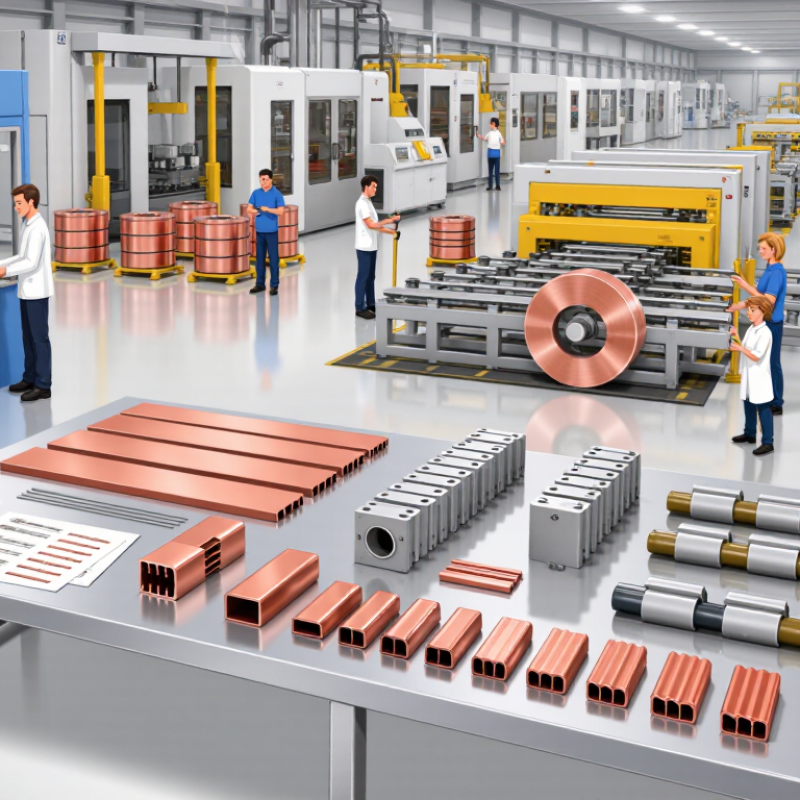
A bus bar is a rigid conductor that distributes electrical power inside equipment. It commonly uses copper or aluminum. You can find it in switchboards, battery systems, data centers, and charging equipment. Its flat shape supports high current flow while saving installation space. Insulation, plating, bends, and drilled holes affect its performance. Small dimensional errors can create difficult assembly problems.
Supplier selection matters because bus bars must handle heat, vibration, and repeated electrical loads. A dependable supplier should provide material certificates, dimensional reports, and routine test records. Ask about conductivity, temperature rise, short-circuit withstand, and coating quality. Request production samples before approving large orders. Confirm whether the supplier can maintain tolerances across different batches. In practical evaluations, a low quotation can hide weak inspection controls or costly packaging issues. That mistake is easy to make.
Tips: Compare drawings carefully. Check sample fit. Review traceability documents. Discuss packaging for international transport. Keep a backup supplier. A polished datasheet is not enough; factory evidence matters more.
A bus bar is a rigid electrical conductor, commonly manufactured from copper or aluminum, used to distribute and collect electrical power inside switchboards, panelboards, motor-control centers, transformers, data-center power systems, and busway assemblies. The supplier’s material control, dimensional accuracy, surface treatment, testing capability, and documentation directly affect electrical performance, thermal behavior, installation reliability, and compliance.
The comparison below uses supplier capability categories rather than company or brand names, allowing global buyers to evaluate suitable sources against consistent technical and commercial criteria.
| Supplier Capability Category | Typical Product Focus | Common Material and Conductivity | Typical Applications | Relevant Standards and Documents | Important Supplier Verification Points | Best Fit for Global Buyers |
|---|---|---|---|---|---|---|
| High-conductivity copper bus bar specialist | Bare, drilled, punched, bent, and cut-to-length copper bars | Electrolytic tough-pitch copper, commonly C11000 or equivalent; approximately 100% IACS conductivity at 20°C for typical high-conductivity copper | Low-voltage switchboards, power distribution panels, transformers, motor-control centers, and industrial control equipment | ASTM B187/B187M; IEC 61439 for completed low-voltage assemblies; customer drawings and tolerance schedules | Material certificate, conductivity test, dimensional inspection, hole-position accuracy, bend-radius control, burr removal, and traceability by batch | Projects prioritizing low electrical resistance and compact conductor dimensions |
| Aluminum bus bar manufacturer | Lightweight aluminum bars, profiles, and large-section conductors | Electrical-grade aluminum, commonly 1350 alloy or equivalent; approximately 61% IACS conductivity at 20°C for 1350 aluminum | Large switchgear, utility distribution, renewable-energy systems, transformer connections, and weight-sensitive installations | ASTM B236/B236M; IEC 61439 where the bar is installed in a completed assembly; approved engineering drawings | Alloy and temper certificate, oxidation control, joint-design guidance, contact-surface preparation, thermal expansion allowance, and torque recommendations | Applications where lower conductor weight and material cost are important |
| Tin-plated copper bus bar supplier | Copper bars with plated contact surfaces or full-surface tin plating | Copper substrate with tin coating; the coating improves contact stability and corrosion resistance but does not replace correct joint design | Humid environments, outdoor electrical equipment, battery systems, marine-related installations, and copper-to-aluminum connections | Base-metal requirements such as ASTM B187/B187M; plating thickness and finish requirements specified by the purchaser or applicable product standard | Coating thickness, adhesion, coverage at holes and bends, surface cleanliness, porosity, discoloration, and contact-resistance test results | Projects requiring enhanced corrosion protection and stable bolted joints |
| Insulated bus bar system supplier | Pre-insulated bars, laminated bars, sleeved conductors, and touch-safe distribution systems | Copper or aluminum conductor with PVC, polyester, epoxy, heat-shrink, or other specified insulation systems | Compact switchgear, power electronics, battery energy storage, data centers, and high-density panel assemblies | IEC 61439 for assemblies; insulation, creepage, clearance, temperature-rise, and dielectric-test requirements defined by the system design | Insulation thickness, dielectric strength, flammability classification, thermal aging, partial-discharge risk where applicable, and process consistency | Installations needing compact spacing and improved touch protection |
| Flexible and laminated bus bar supplier | Multi-layer copper laminates, flexible connectors, and vibration-tolerant links | Thin copper layers joined by insulation or flexible interfaces; conductivity depends on total copper cross-section and joint construction | Battery packs, inverters, electric vehicles, power converters, transformers, and equipment with movement or vibration | Applicable assembly standards, customer drawings, insulation specifications, and thermal-cycle test requirements | Flex-life testing, bend radius, layer alignment, crimp or weld quality, insulation adhesion, temperature rise, and resistance after cycling | Compact power electronics and vibration-sensitive equipment |
| Busway and power distribution system supplier | Enclosed busway, feeder busway, plug-in busway, tap-off units, and connection accessories | Copper or aluminum conductors enclosed in a metal housing with insulation, joints, supports, and protective accessories | Commercial buildings, factories, warehouses, data centers, and high-load distribution routes | UL 857 for busways where applicable; IEC 61439-6 for busbar trunking systems; project-specific installation rules | Type-test evidence, short-circuit withstand, temperature rise, ingress protection, joint compatibility, installation instructions, and local approvals | Scalable building and industrial power distribution |
| Custom fabrication and engineering supplier | Engineered-to-order bars with special bends, offsets, holes, joints, finishes, and assembly support | Copper or aluminum selected according to current, voltage, temperature, mechanical, and environmental requirements | Retrofit switchgear, non-standard panel layouts, generator systems, renewable-energy equipment, and export projects | Approved drawings, IEC 61439 design-verification requirements, material standards, and purchaser inspection plans | Design-review process, 3D or CAD capability, first-article inspection, revision control, packaging, export documentation, and nonconformance handling | Complex geometries and low-to-medium volume projects |
| High-volume standardized supplier | Standard widths, thicknesses, holes, bends, and repeat-production components | Copper or aluminum produced through controlled cutting, punching, bending, plating, and inspection processes | OEM panel production, standardized switchboards, infrastructure projects, and recurring procurement programs | Applicable ASTM material standards, IEC 61439 project requirements, ISO 9001 quality-system documentation where certified | Production capacity, process capability, statistical quality control, lead-time performance, lot traceability, packaging, and supply continuity | Repeat orders requiring stable quality and predictable delivery |