Top 10 Lighting Busbar Trends at 2026 Canton Fair?
The 2026 Canton Fair will showcase significant advancements in the Lighting Busbar sector. With a focus on intelligent solutions, exhibitors will present innovative designs that enhance energy efficiency and integration capabilities. According to a recent industry report, the global lighting busbar market is projected to reach $3 billion by 2027, driven by increasing demand for efficient energy solutions.
AI technology will play a critical role at the fair. Attendees can leverage AI-powered tools to connect with suppliers who meet specific certification standards, such as ISO and CE. This capability not only improves the search process but also optimizes navigation within the expansive 1.55 million square meter venue. Lighting Busbar innovations may face challenges, including market saturation and sustainability concerns. Addressing these will be crucial for long-term growth.
As buyers explore the latest trends, they will encounter creative applications of busbars in diverse sectors. The integration of smart features promises to revolutionize energy distribution. However, potential pitfalls in adaptation and implementation should not be overlooked. Ensuring these products meet evolving standards and consumer expectations is vital in this competitive landscape.
Emerging Technologies in Lighting Busbars for 2026
As we approach the 2026 Canton Fair, the lighting busbar industry witnesses remarkable shifts. Emerging technologies are influencing everything from energy efficiency to installation practices. New materials, like advanced composites, are reshaping how busbars are designed. These innovations promise lighter structures with improved performance.
Smart busbars equipped with IoT capabilities are becoming a reality. They allow real-time monitoring of energy flow and predict potential faults. This can significantly enhance safety and reliability. However, integration challenges persist. Not all users understand these technologies fully. The learning curve might slow initial adoption.
Sustainability also plays a crucial role. Manufacturers are exploring eco-friendly materials and production methods. Recycled materials may reduce environmental impact. Yet, some question their long-term performance. Balancing sustainability with efficiency remains a critical challenge for the industry. As the fair approaches, discussions around these technologies are vital for advancement.
Sustainability Trends Driving the Lighting Busbar Market
As we approach the 2026 Canton Fair, sustainability emerges as a critical theme in the lighting busbar market. Manufacturers are increasingly focusing on eco-friendly materials and energy-efficient designs. This shift reflects a growing awareness of environmental impact. Innovations in renewable energy integration are also gaining traction. These advancements allow for optimized energy management in lighting systems.
Promoting sustainable practices often leads to challenges. For instance, sourcing sustainable materials can be more expensive. Some manufacturers might struggle to balance cost and environmental goals. The push for zero-waste production is another aspect to consider. While many aspire to adopt such practices, the reality can be complex. Not all companies have the resources to implement widespread changes.
Consumer demand for transparent and ethical sourcing is on the rise. However, navigating these expectations requires careful planning. Companies are learning to adapt their operations. The journey towards sustainability is ongoing and not without its hurdles. Many organizations are beginning to realize that true change takes time and persistence.
Design Innovations Enhancing Lighting Efficiency
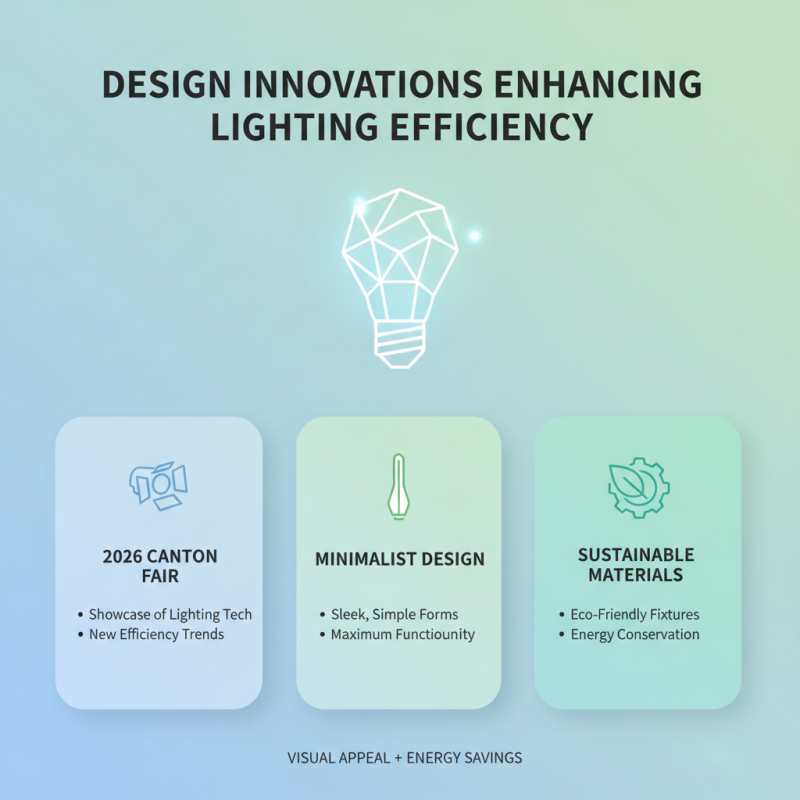
The 2026 Canton Fair is set to showcase notable design innovations in lighting efficiency. As manufacturers explore new technologies, the trend is leaning towards minimalistic designs that provide maximum functionality. Sleek fixtures made from sustainable materials are gaining traction. These pieces enhance visual appeal while conserving energy.
Consider the rise of smart lighting systems. These solutions allow users to control settings remotely, transforming everyday spaces. Users can adjust brightness levels and color with ease. However, implementation can sometimes be challenging. Not all systems integrate seamlessly with existing setups, so careful planning is essential.
Tips: Prioritize compatibility when selecting smart lighting. Research installation requirements to avoid future complications. Users should also examine local regulations on fixture types. This ensures compliance and maximizes effectiveness. Exploring design innovations can offer fresh perspectives. However, keep in mind that not all trends may suit individual needs or tastes. Balancing style with practicality is key to achieving true lighting efficiency.
Market Growth Factors Influencing Lighting Busbar Demand
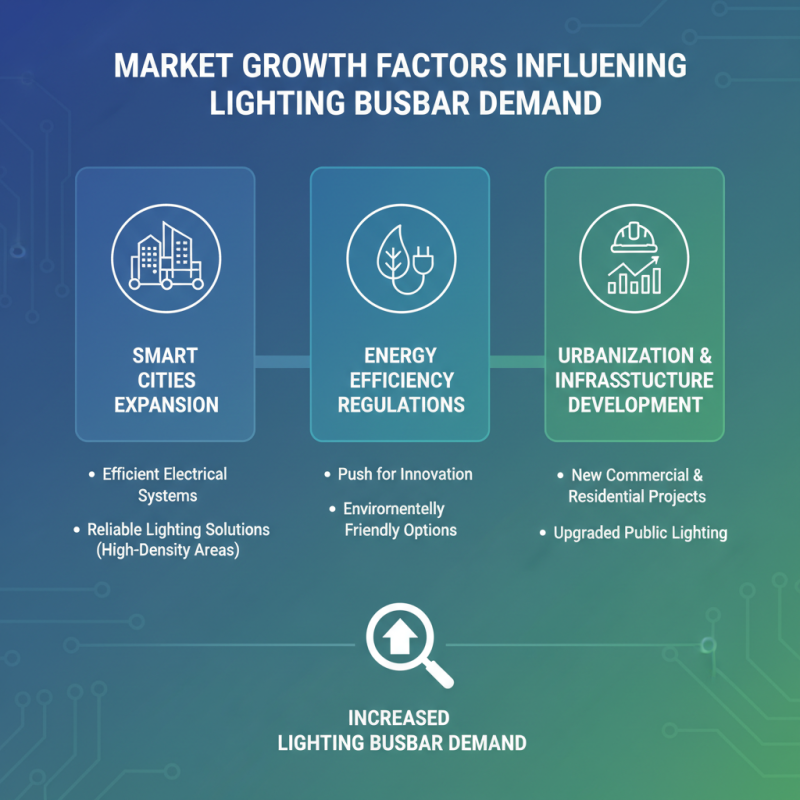
The demand for lighting busbars is surging. Several factors drive this growth in the market. The rapid expansion of smart cities creates a need for efficient electrical systems. Urban areas require reliable lighting solutions, especially in high-density environments. Furthermore, energy efficiency regulations push manufacturers to innovate. More environmentally friendly options are becoming a priority.
Technological advancements are reshaping the lighting busbar landscape. Manufacturers are focusing on lightweight materials and compact designs. This approach enhances installation flexibility and reduces costs. Smart lighting systems integrated with busbars are gaining traction. These systems allow for better energy management and customization. Considerable attention is also on aesthetics, as modern consumers prefer stylish solutions.
However, challenges remain. The initial investment can be high, deterring some potential buyers. Moreover, the need for skilled labor complicates installation processes. Coordination between various stakeholders is not always seamless. These obstacles must be addressed to fully capitalize on market trends. Overall, the potential for growth is enormous, but careful navigation is required.
Key Players and Their Contributions to Lighting Busbar Trends
The lighting busbar market is evolving rapidly, influenced by technological advancements and regulatory changes. Key players in the industry are making significant contributions that shape current trends. According to a recent market report, the global lighting busbar market is expected to grow at a CAGR of 7.5% from 2026 onwards. This growth is driven by increased demand for energy-efficient solutions.
The integration of smart technology into lighting busbars is a notable trend. Companies are developing systems that enable better energy management. For instance, wireless controls allow users to adjust lighting remotely. This capability is essential for modern infrastructure. However, not all solutions are scalable. Some businesses face challenges in adapting existing systems to integrate new technology effectively.
Another critical area involves sustainability practices. Many manufacturers are adopting eco-friendly materials and processes. A report highlighted that over 40% of companies plan to enhance their sustainability initiatives. Yet, there are hurdles. Transitioning to greener options often entails higher initial costs. This can deter organizations from making necessary changes. Addressing these challenges is crucial for future growth in the industry.
Top 10 Lighting Busbar Trends at 2026 Canton Fair