Top 5 Rising Busbar Innovations You Should Know About?
In the ever-evolving landscape of electrical infrastructure, "Rising Busbar" technology plays a critical role. Industry expert Dr. Emily Chen notes, "Innovations in busbar systems are reshaping energy distribution." This statement highlights the dynamic advancements that we should not overlook.
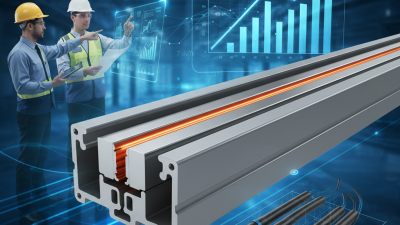
Innovations in Rising Busbar designs focus on enhancing efficiency and safety. With rising energy demands, traditional systems often struggle to keep up. New materials and configurations promise to address these shortcomings. For example, lightweight composite busbars are now gaining attention. They offer improved thermal management and reduced installation time.
These innovations are poised to influence industries globally. However, challenges remain. Adoption can be slow due to existing infrastructure constraints. Additionally, some innovations may have a learning curve. Nevertheless, staying informed about these advancements is essential for any forward-looking professional in the power sector. Rising Busbar technology embodies both potential and limitations. It invites us to explore possibilities while being mindful of practical realities.
Emerging Materials Transforming Busbar Design and Efficiency
Busbars play a vital role in electrical systems, serving as the backbone for power distribution. Recent advancements in materials are changing the landscape of busbar design, promoting efficiency and reliability. New composite materials are being developed to enhance thermal conductivity, enabling better heat dissipation. This improvement is crucial, as overheating remains a concern in high-load applications.
Innovative designs utilizing flexible materials allow for more compact busbar systems. These systems can adapt to various installation environments, reducing the need for extensive modifications. Advanced coatings also provide increased corrosion resistance, which is essential for longevity in harsh conditions. While these innovations bring many benefits, the changes can introduce challenges in performance testing and real-world applications.
The journey toward optimal busbar design is an ongoing process. There may be unforeseen issues with integrating these new materials into existing infrastructures. It's essential to evaluate the trade-offs between performance and implementation costs. As the field evolves, staying informed about these developments will be crucial for engineers and designers alike.
Advancements in Compact and Lightweight Busbar Solutions
The field of busbar technology is evolving rapidly. Compact and lightweight busbar solutions are at the forefront of these advancements. Modern designs prioritize efficiency while reducing space requirements. This creates opportunities for more flexible installations, especially in areas where every square inch counts.
Engineers increasingly focus on materials that provide excellent conductivity without the bulk. New alloys and composite materials are being developed, promising improved performance. These innovations not only enhance conductivity but also resist corrosion and reduce maintenance.
Incorporating lighter busbar systems can drastically impact project costs. They often require less labor to install, saving time and money. When designing systems, think about the installation environment. Consider weight constraints and ensure that the new solutions fit seamlessly.
Tips: Always assess your specific project needs before selecting busbar solutions. Seek advice from professionals in the field. Understanding the long-term benefits of compact designs can lead to wiser investment decisions. Also, remain open to new technologies that may seem challenging at first. They may offer significant performance improvements in the long run.
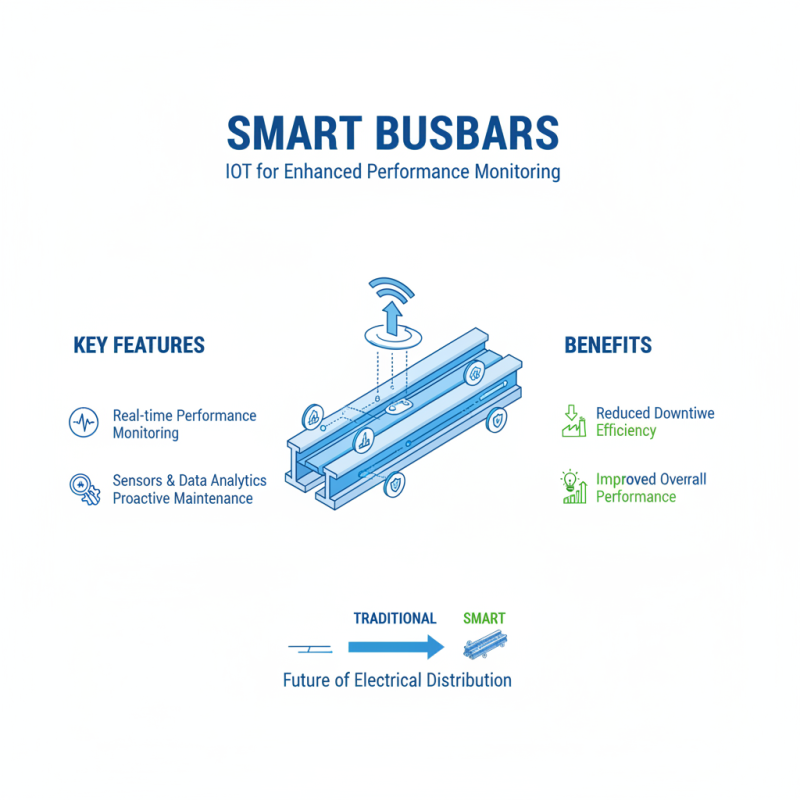
Smart Busbars: Integrating IoT for Enhanced Performance Monitoring
Smart busbars represent a significant shift in electrical distribution. By integrating IoT technologies, these busbars enhance real-time performance monitoring. Sensors and data analytics collect vital information continually. This insight allows for proactive maintenance and reduces downtime. Electrical systems can thus operate more efficiently, improving overall performance.
These innovations are not without challenges. Implementing IoT requires robust cybersecurity measures. Data privacy concerns also arise as devices become interconnected. Additionally, the initial set-up can be costly and complex. Organizations must weigh these factors against the potential benefits, such as reduced energy consumption and longer equipment lifespan.
Data visualization tools provide clarity on electrical loads. Operators can access dashboards showing energy usage patterns. However, not all personnel may be trained to interpret this data. Ongoing education becomes essential to maximize the value of these smart systems. Balancing technology adoption with staff readiness is crucial for success.
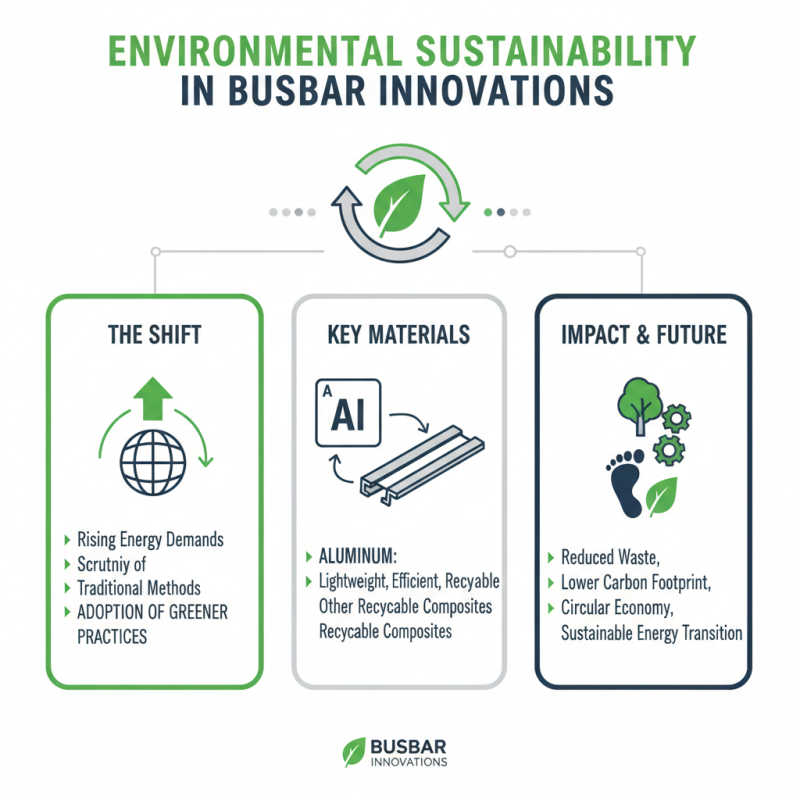
Environmental Sustainability in Busbar Innovations
Environmental sustainability is becoming increasingly vital in the realm of busbar innovations. As energy demands rise, traditional methods face scrutiny. Companies are starting to adopt greener materials and practices. This shift is essential to reduce waste and lower carbon footprints. Many manufacturers are exploring recyclable materials for busbars. For instance, using aluminum is a trending choice. It is light, efficient, and recyclable.
Additionally, innovative designs focus on enhancing efficiency. Improved conductivity helps minimize energy loss. Integrating smart technology into busbars allows for better monitoring and control. This can lead to optimized energy usage. However, challenges remain. Not all sustainable materials achieve the same performance levels. Testing and development are crucial for balancing sustainability and reliability. The quest for eco-friendly solutions is not straightforward. It requires continuous research and adaptation to meet industry needs while protecting the environment.
Future Trends: The Role of AI and Automation in Busbar Technology
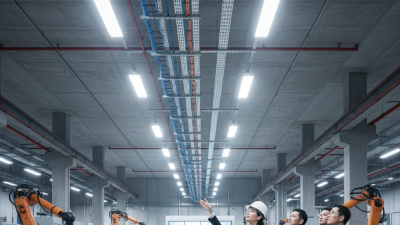
The integration of AI and automation in busbar technology is transforming the electrical distribution landscape. Innovative algorithms now optimize busbar design and layout. These advances lead to better efficiency and lower energy costs. Intelligent sensing devices monitor performance in real-time, allowing for predictive maintenance. This proactive approach reduces unexpected failures, creating a more reliable power infrastructure.
However, incorporating such technologies also poses challenges. The initial investment for AI-driven solutions can be high. Companies need to weigh the benefits against the costs. Moreover, the need for skilled personnel to manage these systems may limit accessibility for some organizations. Balancing innovation with practicality is crucial for widespread adoption.
Automation does streamline processes, but errors can arise. Understanding data outputs requires expertise, which may not be readily available. As the busbar industry evolves, embracing AI will be essential. A careful approach ensures that technology enhances operational capabilities without sacrificing reliability.
Top 5 Rising Busbar Innovations You Should Know About
| Innovation |
Description |
Benefits |
Future Trends |
| AI-Powered Monitoring |
Utilizing AI algorithms to monitor busbar systems for predictive maintenance and efficiency improvements. |
Reduces downtime, increases reliability, and optimizes performance. |
Growth in machine learning applications in electrical infrastructure. |
| Smart Thermal Management |
Advanced materials and sensors that mitigate overheating and improve thermal performance. |
Enhances safety, extends lifespan, and improves energy efficiency. |
Integration with IoT for real-time thermal data analytics. |
| Modular Busbar Systems |
Flexible, customizable systems that can be easily assembled and adapted to various layouts. |
Improved installation times and reduced costs for large-scale projects. |
Increasing demand for adaptable electrical distribution solutions. |
| Enhanced Insulation Technologies |
Innovative materials that provide superior insulation while reducing the size of busbars. |
Higher performance in compact designs, reducing space requirements. |
Focus on lightweight solutions in power distribution systems. |
| Automated Assembly Processes |
Utilization of robotics and automation in the manufacturing of busbars. |
Increased production speeds and consistency in quality. |
Expansion of smart factories and Industry 4.0 initiatives. |