How to Choose the Right Compact Busway for Your Project?
Choosing the right Compact Busway for your project is crucial for efficiency and safety. According to a recent market report by Allied Market Research, the global busway market is projected to reach $8.5 billion by 2027. This highlights the growing importance of compact solutions in commercial and industrial settings.
Expert insights also emphasize the significance of this choice. John Smith, a senior engineer at Busway Solutions Inc., stated, "Selecting the right Compact Busway can make or break your project." His words remind us that the right decision impacts performance and overall project success. Factors such as capacity, installation space, and environmental conditions must be considered.
In recent years, many projects faced delays due to poor busway selections. A case study revealed that a factory experienced a 20% efficiency drop after installing an inappropriate system. This underlines the need for thorough research and expert guidance when choosing the right Compact Busway for your unique requirements.

Understanding Compact Busway and Its Applications
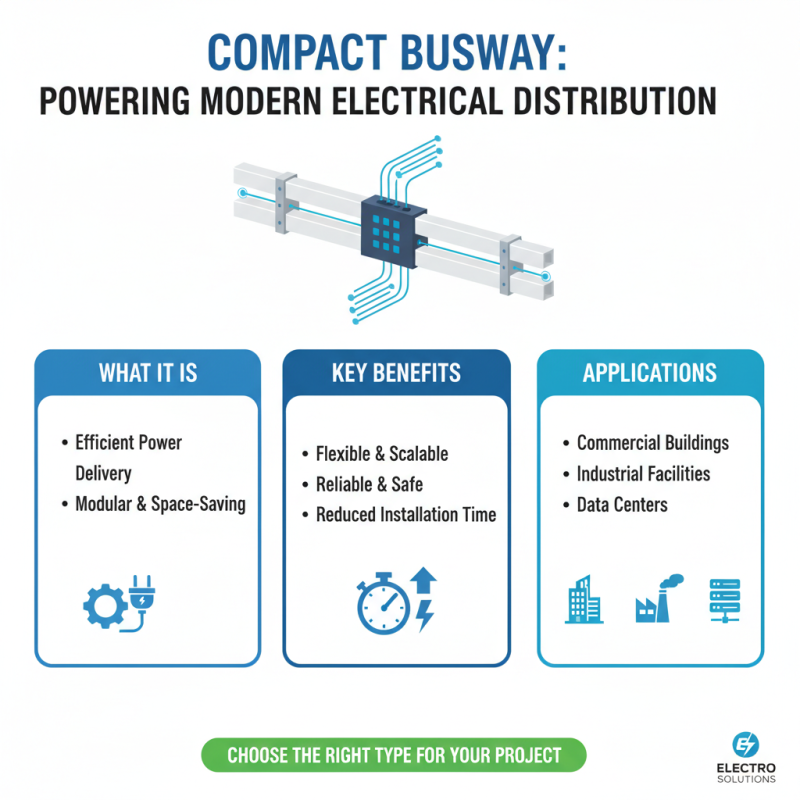
Compact busways are essential for modern electrical distribution. They enable efficient delivery of power in various applications. Understanding how to select the right type is crucial for your project. Compact busways come in various designs. Their flexibility allows for use in commercial buildings, industrial facilities, and data centers.
When choosing a compact busway, consider the layout of your space. Measure available dimensions carefully. This helps ensure proper fit and efficiency. Think about the power load you will need. Not all busways are created equal. Some may offer higher capacity than others.
Tips: Always consult with a professional to outline your needs. Gather insights from previous users about their experiences. Review installation requirements; it can be more complex than anticipated. Regular maintenance is a must; it often gets overlooked.
Key Factors to Consider When Selecting a Compact Busway
When selecting a compact busway, several key factors must be evaluated. The first aspect to consider is the current rating. You need to determine the operational requirements of your project. If the busway cannot handle the expected loads, it may lead to overheating. Size and dimensions are also crucial. It must fit within the designated space while allowing for adequate air circulation.
Material composition is another important consideration. Different materials offer varying benefits in terms of durability and conductivity. Weight can affect transport and installation. Lighter designs may be easier to manage but could compromise strength. Also, think about ease of installation and maintenance. Complex systems can lead to higher labor costs and downtime.
Lastly, consider environmental factors. If the busway will be installed in a harsh environment, it needs to withstand those conditions. Reflection on these factors will lead to better decision-making. Without a thorough evaluation, you may face issues later. It’s easy to overlook small details that could result in big headaches down the line.
Comparing Different Types of Compact Busway Systems
When comparing different types of compact busway systems, the first factor to consider is their physical design. Some systems are modular and can be easily adjusted for different layouts. Others come in fixed sizes, which might limit flexibility. You might find that the weight and dimensions of the units impact the installation process. These factors can complicate your project if not properly assessed.
Additionally, pay attention to the electrical specifications. Different busway systems support varying amperage levels and configurations. Some are designed for high-density applications, while others serve lighter, general loads. Misjudging the requirements can lead to operational inefficiencies. It's essential to evaluate the electrical demands of your project thoroughly.
Finally, cost can be a significant deciding factor. The initial price may not tell the whole story. Installation complexities could lead to higher labor costs, or maintenance might incur extra expenses. Carefully estimating the total cost of ownership is vital. Sometimes, the cheaper option is not the best long-term investment.
Evaluating Cost and Efficiency of Compact Busway Options
When evaluating compact busway options, cost and efficiency play crucial roles. The initial investment can vary significantly. Some systems offer lower upfront costs. However, they may incur higher operational expenses. It's essential to calculate long-term costs alongside purchase prices. Consider energy consumption and maintenance needs. These factors can greatly impact overall project budgets.
Efficiency goes beyond just energy savings. Think about installation time and labor. Some busway systems are designed for quicker setups. This can save time and reduce labor costs. Look at the versatility of the design as well. Systems that allow future expansions may prove beneficial in the long run. However, assessing whether these features meet your project's specific needs requires careful thought.
Choosing the right compact busway is often complex. There may be trade-offs between cost and efficiency that require reflection. Perhaps the least expensive option seems attractive. Yet, it could lead to higher future expenses. Engaging with contractors and engineers early in the process may help. Their insights can often uncover challenges not initially considered. Balancing immediate savings with future expenses demands a thorough approach.
Cost and Efficiency Comparison of Compact Busway Options
Installation and Maintenance Considerations for Compact Busway
When installing a compact busway, location is critical. Choose a site that avoids moisture or excessive heat. It's vital to keep the area clean. Dust and debris can lead to failures. Ensure easy access for maintenance. This can save time later.
Regular maintenance is necessary for long-term success. Inspect joints and connections periodically. Look for signs of wear or heat damage. Tighten loose bolts to maintain stability. Schedule routine checks to avoid unexpected shutdowns. Failure to do so can result in costly repairs.
Installation should follow the provided guidelines closely. Misalignment during setup can cause problems. Ensure all components are compatible with each other. If something does not fit right, it may need reevaluation. Take your time during installation to get it right the first time. These small efforts can prevent significant headaches in the future.
How to Choose the Right Compact Busway for Your Project? - Installation and Maintenance Considerations for Compact Busway
| Dimension |
Value |
Consideration |
| Rated Current |
400 A |
Ensure it meets project power requirements |
| Length |
2 meters |
Verify space availability for installation |
| Busway Height |
150 mm |
Consider clearance for maintenance |
| Material |
Aluminum |
Evaluate thermal and environmental resistance |
| Insulation Type |
Class B |
Assess fire safety regulations compliance |
| Installation Method |
Surface-mounted |
Check compatibility with existing infrastructure |
| Maintenance Frequency |
Annual |
Plan for periodic inspections to ensure reliability |