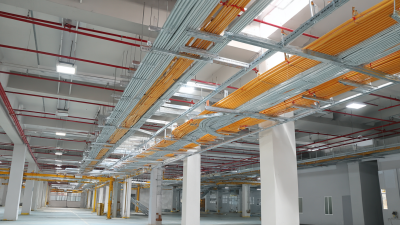
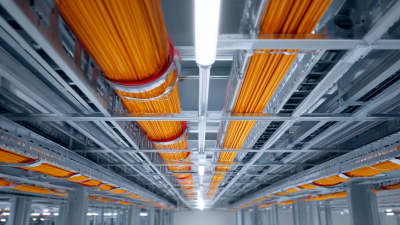
Why Choose Lighting Busway for Your Electrical Distribution Needs?
In the realm of electrical distribution, the selection of suitable infrastructure is crucial. Lighting Busway stands out due to its efficiency and flexibility. Industry data indicates that using busway systems can reduce installation time by up to 30%. This significant reduction translates to cost savings and faster project completion, making it an appealing option for many enterprises.
Renowned industry expert, Dr. Emily Carter, states, "Lighting Busway systems revolutionize the way we think about power distribution." This sentiment resonates as industries increasingly seek innovative solutions to meet their energy demands. The compact design of Lighting Busway also plays a role. It minimizes space usage, a challenge for facilities with limited room.
However, not all applications may benefit equally from Lighting Busway. Organizations must critically assess their specific needs and scenarios. Adopting such technology requires careful planning and knowledge. The choice should reflect both immediate requirements and long-term objectives. As organizations evaluate options, Lighting Busway remains a compelling consideration in modern electrical distribution.

Advantages of Using Lighting Busway in Electrical Systems
Lighting busway systems offer numerous advantages for electrical distribution. These systems streamline power distribution with their modular design. Installation is typically faster than traditional methods, making them highly efficient. They are ideal for large facilities needing flexible layouts. In busy environments, being able to reconfigure easily is essential.
Another point is their durability. Lighting busways can withstand harsh conditions better than conventional wiring. They also have a smaller footprint, which frees up valuable space in industrial settings. However, maintenance can be tricky. Sometimes, accessibility poses challenges. Regular checks are necessary to ensure safety and performance but can be overlooked.
Moreover, lighting busways can lead to cost savings over time. Energy efficiency is enhanced, reducing utility bills. While the initial cost may be higher, users often realize long-term benefits. It’s worth reflecting on whether the upfront investment aligns with future savings. Balancing costs and efficiency is a critical consideration. These systems could be the solution for many.
Comparison of Lighting Busway to Traditional Wiring Methods
When comparing lighting busway to traditional wiring methods, clarity is crucial. Lighting busway offers a streamlined approach. This system utilizes metal conduits that house multiple circuits in one unit. It simplifies installation and reduces the time needed for electrical work. Traditional wiring can be messy, requiring various cables and splices. This complexity can lead to installation errors and future maintenance issues.
Lighting busway promotes flexibility in design. It allows for easy adjustments. You can relocate fixtures without major overhauls. Traditional methods often mean redoing extensive wiring. The scope of this work can be daunting, especially in larger installations. Many prefer the simplicity and elegance of busway systems, but some still find it costs more upfront.
In terms of safety, both systems have pros and cons. Busway systems reduce points of failure. However, they require proper installation to uphold safety standards. Traditional wiring is familiar to many electricians. Despite its age, it can be problematic if not maintained. Each method has its trade-offs, and careful consideration is essential for the right choice.
Why Choose Lighting Busway for Your Electrical Distribution Needs?
The chart above illustrates the benefits of using Lighting Busway compared to traditional wiring methods across different dimensions. Each category represents a critical aspect of electrical distribution, highlighting the efficiency and advantages of the busway system.
Key Components and Design Features of Lighting Busway Systems
Lighting busway systems are increasingly popular in electrical distribution. These systems consist of several key components that enhance efficiency and safety. The busway typically includes conductors, insulation, and protective enclosures. The conductor material often is aluminum or copper. Each has its benefits. Aluminum is lighter and can reduce installation costs. Copper, however, has better conductivity and can handle higher loads.
Tip: Look for systems with superior thermal performance. This can improve energy efficiency and reduce costs over time. According to the International Energy Agency, efficient electrical systems can cut energy loss by up to 30%.
Design features significantly impact performance. Many modern busway systems prioritize modular designs. This allows easy expansion or reconfiguration as needs change. Additionally, these systems often come with integrated monitoring tools. These tools help in real-time tracking of power consumption.
Tip: Regularly assess your system's capacity. An underperforming system can lead to potential risks. Research by the Electrical Engineering Association indicates that 25% of electrical failures stem from overloaded circuits. Ensure your lighting busway system meets not just current needs, but future demands as well.
Applications of Lighting Busway in Various Industries
Lighting busway systems are increasingly popular across various industries. They offer efficient power distribution and simplify installation. Facilities like warehouses benefit from their flexibility. The modular design allows for quick adjustments. However, users must plan carefully. If not designed right, the system may limit future expansion.
Manufacturing plants often use lighting busways for their agility. These systems can adapt to changing layouts easily. This adaptability is crucial for production lines that frequently shift. Yet, improper installation can lead to issues. Regular maintenance is necessary to prevent failures.
In commercial spaces, the aesthetic aspect comes into play. Designers appreciate the sleek look of busway systems. They can blend seamlessly with modern architecture. Still, the initial cost can be a concern. Organizations must weigh their options wisely, ensuring reliability and efficiency.
Installation and Maintenance Considerations for Lighting Busway
When considering lighting busway for electrical distribution,
installation and maintenance are crucial factors. Proper installation is key to
functionality. Make sure the busway system is level and securely fastened. Gaps can lead to issues.
Always follow the manufacturer’s guidelines. If you overlook this, future repairs may be costly.
Maintenance is equally important. Regular inspections should not be ignored. Look for signs of wear
or damage. Check connections and support systems. It's a reliability matter. Sometimes, the smallest
issue can escalate quickly. Cleaning the busway
is also essential. Dust and debris can impair performance. Don't wait for problems to arise.
Proactive measures save time and costs.
Lastly, consider the environment. Ensure the busway is suited for your specific conditions.
Temperature, humidity, and other factors play a role.
If not, adjustments may be necessary. Sometimes, lighting busway fails to meet expectations.
A little planning goes a long way.