2026 Best Mylar Busway Manufacturers for Global Buyers
Global buyers entering the 2026 busway market need more than a polished supplier list. They need verified engineering evidence. Mylar Busway usually refers to busway systems using polyester-film insulation, although the term is not a universally standardized product classification. That distinction matters when comparing manufacturers across countries.
Industry studies from Grand View Research and MarketsandMarkets continue to identify rising demand for compact power distribution in data centers, factories, hospitals, and commercial buildings. Their market assessments also highlight modular installation, lower space consumption, and improved maintenance access. However, public reports rarely separate Mylar-insulated systems from broader busbar trunking categories. The market is imperfectly mapped. Buyers should treat headline forecasts carefully.
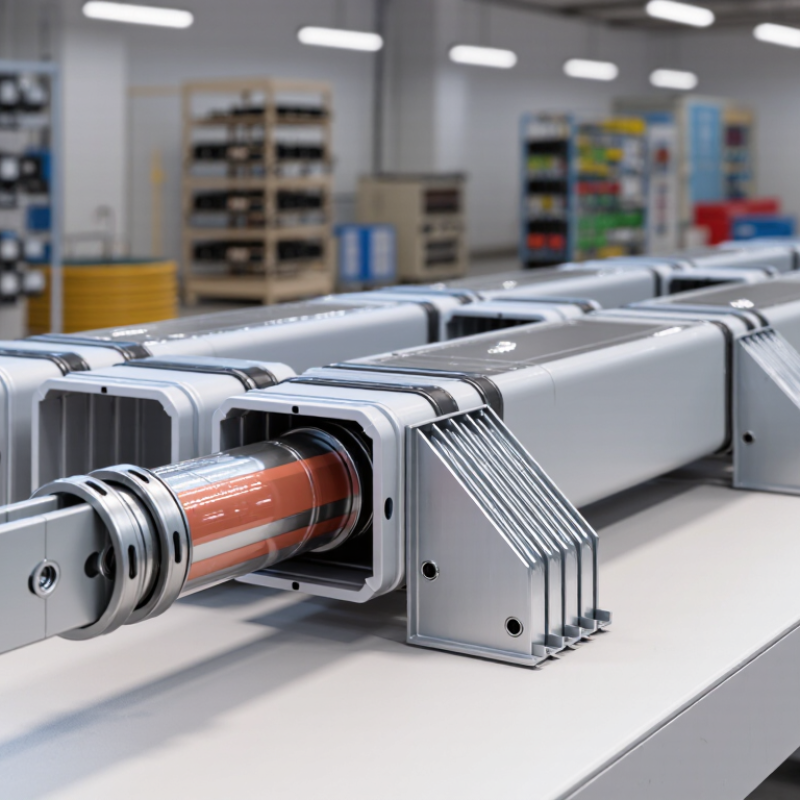
IEC 61439-6 provides a stronger technical reference. It addresses busbar trunking systems, including design verification, temperature-rise limits, insulation performance, and short-circuit withstand capability. These details matter beside a real installation: copper or aluminum conductors, sealed joints, visible torque markings, and insulation that remains stable near heat sources. Electrical safety educator Mike Holt states, “Safety is not an option.” That principle should guide every factory audit and technical review.
The 2026 best-manufacturer shortlist should therefore examine test reports, production traceability, routine inspection records, and regional service capacity. Ask for independent laboratory evidence, not only catalog claims. Confirm IP ratings, fire behavior, conductor material, and compatibility with local electrical standards. A low quote may look attractive. It may also conceal weak documentation, limited spares, or difficult commissioning. Reliable selection requires practical experience, engineering judgment, and the humility to question incomplete information.
Mylar Busway Basics: PET Insulation and ~17 kV/mm Dielectric Strength
Mylar Busway Basics: PET Insulation and ~17 kV/mm Dielectric Strength
For global busway buyers, PET film offers a thin, stable insulation layer around copper or aluminum conductors. Its typical dielectric strength is about 17 kV/mm, according to independent test data using ASTM D149 and IEC 60243-1 methods. That figure is useful, but it is not a guaranteed operating limit. Film thickness, humidity, temperature, wrinkles, and edge damage can reduce real-world performance. In a factory inspection, a small crease may matter more than a polished laboratory number.
Industry testing reports also show that PET retains good dimensional stability across normal electrical-equipment temperatures. However, thermal aging can weaken insulation over time. Buyers should request partial-discharge results, thermal-aging evidence, tensile data, and lot-level thickness records. IEC 61439 verification remains important for complete low-voltage assemblies, because film strength alone cannot prove busway safety. This point is often missed.
Tips: Ask for dielectric-strength results at the actual film thickness. Check whether the test used dry or conditioned samples. Confirm clearance, creepage, and bend-radius controls during assembly. A supplier with traceable inspection records is safer than one offering only a single headline value. The ~17 kV/mm figure is a starting point, not a design shortcut.
Global Standards: IEC 61439-6, 400–6,300 A Ratings, and IP Codes
2026 Best Mylar Busway Manufacturers for Global Buyers
For global buyers, IEC 61439-6 is a practical starting point for comparing busway systems. It covers assemblies designed for power distribution, including polyester-film insulated conductors. A compliant system should show clear design verification and routine testing evidence. Look for temperature-rise data, short-circuit withstand results, insulation performance, and verified clearances. These details matter inside compact electrical rooms.
Current systems commonly span 400–6,300 A, supporting applications from commercial buildings to large industrial facilities. However, amperage alone does not prove suitability. Engineers should check ambient temperature, installation altitude, conductor material, joint design, and expected load diversity. A 6,300 A rating may still be unsuitable if ventilation is restricted. That mistake is easy to make.
Tips:
Match the IP code to the installation environment, not just the product brochure. IP ratings describe protection against solids and water, but they do not replace corrosion assessment or fire planning. Confirm whether the stated IP level applies to straight sections, joints, tap-off units, and end flanges. Ask for test conditions and independent documentation. Do not accept vague claims. Also, review local coordination requirements before ordering; international standards improve consistency, but project conditions still vary. A careful factory audit, sample inspection, and installation review can reveal weaknesses that certificates alone may miss.
2026 Manufacturer Shortlist: UL, IEC Testing, Capacity, and Lead Times
For global buyers, a credible Mylar busway manufacturer must prove more than production volume. A shortlist should include documented UL 857 and IEC 61439-6 testing, with reports matching the offered design. Check the exact enclosure, conductor material, insulation system, and rating tested. Generic certificates create risk.
Capacity needs practical verification. Ask for rated current, voltage, temperature-rise data, and short-circuit withstand performance. A serious factory can explain how polyester-film insulation is applied around copper or aluminum conductors. Factory audits should inspect winding control, torque records, insulation checks, and final electrical testing. Small gaps matter.
Lead time is often less predictable than brochures suggest. Request separate schedules for drawings, samples, tooling, production, and inspection. Many suppliers quote six weeks, then delay approval changes. That is not always misconduct, but it exposes weak project control. Ask how the manufacturer handles replacement sections, custom tap-off points, and export packaging. Capacity claims also deserve caution; a large workshop may still lack trained assembly teams during peak months. The strongest shortlist combines verifiable test evidence, repeatable quality records, transparent capacity, and realistic delivery milestones.
Due Diligence: Compare Icw, Ipk, Thermal Rise, and Factory QA Records
2026 Best Mylar Busway Manufacturers for Global Buyers
Choosing a reliable Mylar busway manufacturer requires more than comparing prices. Request certified test data for Icw, Ipk, and thermal rise at rated current. Icw shows short-time withstand performance, while Ipk indicates resistance to sudden peak forces. These values should match the proposed installation, not only laboratory conditions. Thermal rise matters in crowded electrical rooms, where poor heat control can shorten insulation life. Factory QA records reveal whether production quality remains stable across different batches.
Tips: Ask for recent routine-test reports, type-test certificates, calibration records, and traceable serial numbers. Check conductor dimensions, joint torque procedures, insulation thickness, and enclosure quality. A factory should explain test limits clearly. Vague answers deserve caution.
During supplier audits, compare documented results with the exact busway configuration you plan to buy. Verify current ratings, ambient temperature, installation direction, and joint design. Small differences can change performance. Review nonconformance reports too; perfect records may look impressive, but they can hide weak reporting. A supplier that admits past defects and explains corrective action may be more dependable. Still, do not accept promises without evidence. Independent inspection before shipment adds useful control, especially for international projects with long replacement times.
Global Buyer Scorecard: Cost, Compliance, Delivery, and 10-Year Support
Global Buyer Scorecard: Cost, Compliance, Delivery, and 10-Year Support
Selecting a Mylar busway manufacturer requires more than comparing the lowest quotation. A practical scorecard should weight cost, compliance, delivery, and long-term support. The IEA’s Electricity 2024 report estimates that annual grid investment must rise from about USD 400 billion to USD 600 billion by 2030. That pressure makes predictable installation costs increasingly important. Compare conductor materials, joint hardware, testing, freight, duties, and commissioning. A cheaper busway may create expensive site delays.
Compliance should be documented, not promised. Request IEC 61439-6 design verification, applicable short-circuit test evidence, temperature-rise results, and clear ingress protection ratings. For North American projects, check the relevant safety certification and local inspection requirements. I also review factory quality records, calibration dates, and sample inspection procedures. Paperwork can look perfect.
Delivery deserves measurable targets. Ask for approved drawings, production milestones, factory acceptance testing, packaging photos, and spare-joint availability. The Uptime Institute’s 2023 Global Data Center Survey reported that 60% of outages cost more than USD 100,000. A missed busway shipment can therefore exceed its original purchase price. For ten-year support, score warranty duration, response time, replacement-part commitments, technical training, and product-obsolescence planning. I would not assign full points without speaking to two recent customers. That extra check is slower, but often more revealing.